.webp)
Published on
Sep 21, 2026
Kitchen
7 Quick Christmas Desserts You Can Actually Finish Before Guests Arrive
Discover 7 easy Christmas dessert recipes! From festive no-bake treats to impressive holiday sweets, find your perfect Christmas dessert here.


Use high heat, cook ingredients in batches to avoid overcrowding, and keep ingredients moving in the pan for even cooking.
Cook sliced onions slowly over low heat with a bit of oil or butter, stirring occasionally, until deeply browned and sweet.
Use a meat thermometer to check internal temperatures: 145°F for pork, 160°F for ground meats, and 165°F for poultry.
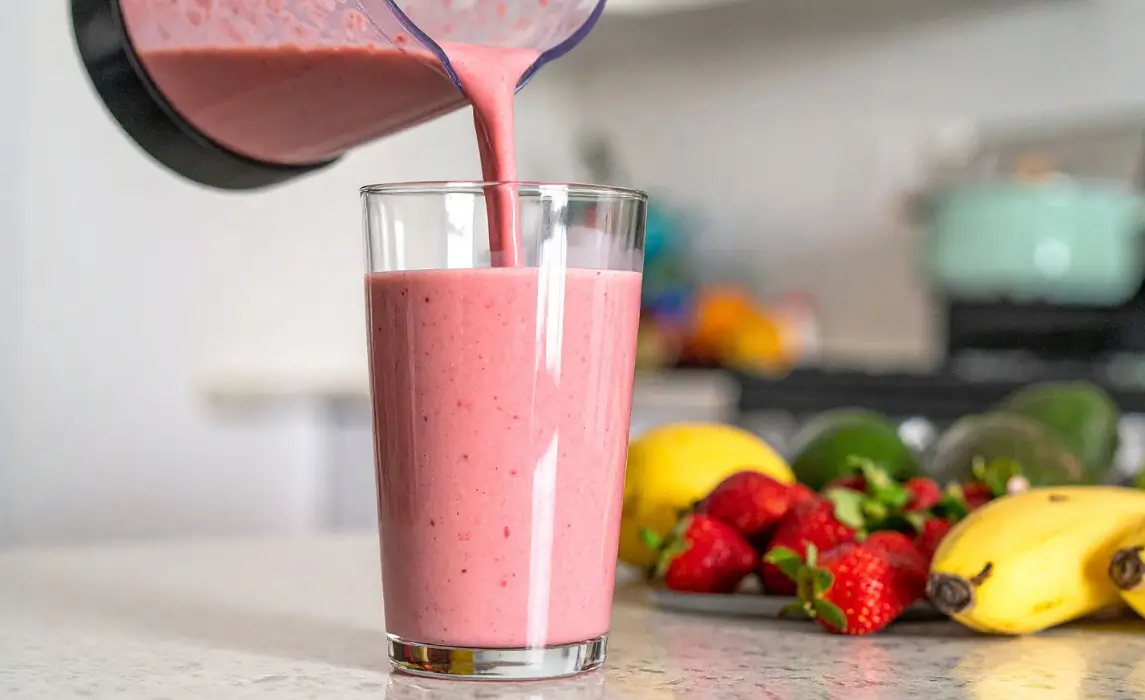
You've probably seen this scenario play out: someone gets excited about making smoothies, drops $40 on a basic blender, tries to pulverize frozen berries, and ends up with chunky disappointment and a burning motor smell.
Here's what you actually need to know about blender types, based on what they can really do, not what the box promises.
These are the $30-$100 blenders you see everywhere. They work fine for soft fruits, liquids, and already-cooked vegetables. The catch? They struggle with anything that fights back.
If your pitcher is plastic, expect it to scratch and cloud over time (those scratches hold odors, by the way). Glass pitchers stay clear but add weight,something to consider if you have wrist or grip issues. The sweet spot for capacity is around 56 ounces; smaller feels limiting, larger gets awkward to pour.
One thing rarely mentioned: check if the blade assembly removes from the bottom. If it doesn't, cleaning around those crevices becomes genuinely annoying.
Here's the reality: a 500-watt blender can handle soft fruits and cooked vegetables. For ice crushing, you need at least 600 watts. For frozen fruits straight from the freezer, 1000+ watts prevents that grinding, struggling sound that means you're burning out the motor.
But wattage isn't everything. A 1200-watt blender with poorly designed blades will perform worse than an 800-watt model with engineered blade geometry. Look for stainless steel blades (not just "steel-coated") with asymmetrical designs,they create better vortex action.
Yes, they cost $300-$600. But here's what that money actually buys: a motor that won't quit when you throw in frozen mango chunks, blades engineered for impact rather than just spinning, and containers that won't crack from temperature shock when you pour hot soup in.
You're looking at Vitamix, Blendtec, and similar brands that repair shops actually stock parts for. These can run for 10+ years with regular use. They'll make almond butter without adding oil, turn cashews into cream, and grind coffee beans without a separate grinder.
The real difference? Heat. These motors run powerful enough that a five-minute blend actually warms soup from friction alone. That's not marketing,it's physics from the blade speed (around 240 mph at the tip).
High-performance blenders shine when you're hosting. Making frozen margaritas for eight people? A standard blender will struggle through three batches and overheat. A high-performance model handles it in one batch, takes 45 seconds, and moves on to the next round without complaint.
The speed matters when guests are waiting. Hummus for a party takes 60 seconds in a Vitamix versus 4-5 minutes of scraping and restarting in a standard blender. When you're juggling multiple dishes, that time adds up.
Tall, narrow containers create better vortex action for smoothies and liquids. Wide, short containers work better for thick mixtures like nut butters and hummus because ingredients don't get flung up the sides out of blade reach.
Square containers (like Blendtec) force ingredients back down into the blades at the corners. Round containers need more liquid or a tamper tool to keep things moving.
Speaking of tampers,those stick tools that push ingredients down,they're essential for thick blends in high-performance models. If your blender doesn't include one and you plan to make nut butters, frozen desserts, or thick dips for entertaining, buy one. Stopping to scrape down sides every 30 seconds defeats the purpose of a powerful motor.
Also called stick blenders or hand blenders, these might become the tool you reach for most often,even if you own a high-end countertop model.
Why? Because you can blend soup directly in the pot without transferring hot liquid (which always ends badly). You can make a single serving of salad dressing in a mason jar. You can puree baby food in the same bowl you'll serve it from.
The shaft length matters more than you'd think. A 9-inch shaft keeps your hand further from splattering hot soup than a 7-inch one. Look for at least 200 watts if you'll blend anything beyond soft vegetables,less power means longer blending time and arm fatigue.
Here's the specific detail that changes everything: get one with a "bell" guard at the bottom that reduces suction. Without it, the blender creates a vacuum seal against your pot bottom and you have to wrestle it free. With it, blending feels effortless.
Variable speed control isn't just a nice feature,it's necessary. Starting on high speed with an immersion blender splashes everything within a two-foot radius. You need to start low to pull ingredients into the blade, then increase speed once a vortex forms.
Models with single-speed buttons save $10-20 but create messy kitchens and wasted food.
Here's what makes immersion blenders invaluable when hosting: you can make soup, sauce, or gravy right in the serving pot moments before guests arrive. No transferring between containers, no extra dishes, no timing issues.
They're also perfect for fixing texture issues on the fly. Salad dressing separated? Blend it in the pitcher. Gravy too chunky? Quick blend in the pan. Guests arriving in 10 minutes and your guacamole is too smooth? You can't un-blend it in a countertop model, but you could have controlled texture with an immersion blender.
The quiet operation is underrated too. You can blend something in the kitchen while guests are in the next room without drowning out conversation.
These compact blenders (NutriBullet, Magic Bullet, etc.) excel at exactly one thing: making single-serve smoothies you can drink from the blending cup. That's genuinely convenient if you're rushing out the door each morning.
But let's be honest about the limitations. Most max out at 24 ounces,fine for one person, frustrating if you're making smoothies for two. The cup design means you can't really make anything that needs pouring or scraping out. Hot liquids? Absolutely not; the pressure buildup can blow the lid off.
The extractor blade design (flat rather than pitched) does work better for breaking down seeds and stems in leafy greens. If your smoothies include kale or chia seeds, that's a real advantage.
What companies don't advertise: these motors aren't designed for more than 60-second blends. Run it longer and you'll smell burning plastic from the motor housing.
Personal blenders fail at parties. Making drinks for multiple people means running it 6-8 times, which overheats the motor and bottlenecks your prep. Plus, serving guests smoothies from plastic cups with blade attachments looks makeshift at best.
If you host occasionally and only own a personal blender, buy pre-made dips and skip the frozen cocktails. Or invest in a real blender.
Most personal blenders use BPA-free plastic cups, which is fine for cold ingredients. But plastic absorbs stains from berries and turmeric, and develops a funky smell after 6-12 months of daily use no matter how well you wash it.
Some brands offer stainless steel cups as upgrades. They cost more upfront but don't stain, smell, or degrade. If you're drinking from the cup daily, it's worth the extra $15-25.
Unless you're blending 20+ times daily, you don't need a commercial blender at home. They're built for abuse,think smoothie shops running them continuously for 8-hour shifts.
The real difference isn't power (many home high-performance blenders match their wattage). It's duty cycle,how long they can run before needing to cool down. Commercial models have no duty cycle limits.
They're also loud. Like, conversation-stopping loud. The sound insulation that makes home blenders tolerable gets stripped out because commercial kitchens prioritize durability over noise.
If you regularly host parties for 20+ people and make frozen cocktails or large-batch dips, a commercial blender handles the volume without the duty cycle limits of home models. But you'll pay $800-1500, and the noise will clear the room every time you use it.
For most hosts, even those who entertain monthly, a high-performance home blender with a backup pitcher gives you the same capacity without the commercial price tag or noise.
For reference, normal conversation is around 60 decibels. Standard blenders run 80-90 decibels (as loud as a garbage disposal). High-performance models hit 95-100 decibels (lawnmower territory). Commercial blenders can reach 105+ decibels.
If you blend early mornings or have noise-sensitive household members, look for models with sound enclosures. Vitamix's Quiet One runs around 64 decibels,expensive, but genuinely quieter than most dishwashers. This matters when you're making pre-brunch mimosas and don't want to wake the whole house.

These actually cook soup from raw ingredients,you add vegetables and broth, and 30 minutes later you have hot, blended soup. Brands like Instant Pot and Ninja make versions under $200.
The honest assessment? They're convenient but not magical. You're still better off with a regular pot for most recipes. Where they shine is hands-off cooking when you're juggling other tasks or need to prep soup while focusing on other dishes for a dinner party.
These remove air before blending to reduce oxidation. The theory: less foam, slower browning, more nutrients preserved. The reality: the difference is subtle. If you're making a smoothie and drinking it immediately, you won't notice. If you're meal-prepping smoothies to drink days later, the reduced oxidation does keep them fresher.
For entertaining, vacuum blenders have one specific advantage: frozen cocktails stay smooth longer without separating. If you're making margaritas 30 minutes before guests arrive, vacuum blending keeps them from getting watery and separated while they wait in the freezer.
Forget the marketing specs for a minute. Ask yourself:
What will you blend most often? If it's frozen fruit smoothies every day, prioritize motor power. If it's mostly soups and sauces, an immersion blender might serve you better than a countertop model.
How often do you entertain? If you host monthly or more, budget capacity and power for party scenarios,frozen drinks for 8-10 people, large-batch dips and sauces, multiple uses in quick succession without overheating. A 64-ounce pitcher and 1000+ watt motor become requirements, not luxuries.
How much counter space do you have? High-performance blenders are tall,often too tall to fit under standard cabinets. Measure your counter-to-cabinet height before buying. Most high-performance models stand 17-20 inches tall with the lid on. Standard upper cabinets sit 18 inches above counters. Do the math before ordering.
Can you handle the noise? If you make morning smoothies while others sleep, look for models with enclosed sound shields or consider a personal blender that runs for shorter bursts. If you entertain and blend while guests mingle, noise becomes a social consideration,commercial-level volume kills conversation.
How much will you actually clean it? The blenders that sit unused aren't always the cheapest ones,they're the ones that are annoying to clean. If parts aren't dishwasher-safe or the blade assembly is fussy, you'll use it less.
Blender blades don't need sharpening,they're designed to pulverize through impact and speed, not slicing precision. If your blender performs worse over time, it's usually a worn motor coupler (the part connecting motor to blades) or degraded rubber gaskets causing leaks, not dull blades.
That said, calcium buildup from hard water can coat blades and reduce performance. Monthly cleaning with white vinegar (blend 2 cups water + 1/4 cup vinegar for 60 seconds) removes mineral deposits.
If your blender smells like burning or the motor stops mid-blend, it's overheated. This is normal for lower-wattage models working hard. Unplug it immediately and let it cool for 15-30 minutes. Continuing to run an overheated motor causes permanent damage.
High-performance blenders have thermal cutoff switches that stop the motor automatically. Cheaper models don't,you'll smell burning before failure.
This becomes critical when entertaining. If you're making three batches of frozen margaritas back-to-back on a budget blender, expect it to overheat. You'll need 15-minute cooling breaks between batches, which throws off party timing. High-performance models power through without breaks.
Interlock systems prevent the motor from running unless the container sits properly on the base. This isn't just about safety,it also prevents you from accidentally starting the blender when it's not assembled, which can damage the motor.
Non-slip bases seem minor until you're blending something thick and the whole unit walks across the counter. Suction cup feet or heavy bases (4+ pounds) prevent this. When you're rushing to prep for guests, a blender that stays put saves frustration and potential spills.
Remember: "Max fill" lines exist for a reason. Overfilling causes leaks and poor blending because ingredients can't move properly. Plan for about 75% of stated capacity as your realistic working volume.

A 64-ounce blender filled to the safe line (48 ounces) makes about 6-7 margaritas. If you're hosting 12 people and everyone wants a drink, you're running it twice minimum. With a standard blender, you'll need cooling time between batches. With high-performance models, it's back-to-back.
The ice-to-liquid ratio matters: 2 cups ice to 1 cup liquid (tequila, lime juice, triple sec) for proper frozen consistency. Too much liquid and it's slushie soup. Too much ice and the blender stalls.
Blenders don't use much electricity,even high-performance models running at 1500 watts cost about 3-5 cents per smoothie. Over a year of daily use, that's roughly $12-18 in electricity.
The exception: heating blenders that cook soup use more power (similar to an electric kettle), adding about 15-20 cents per batch.
Gaskets and seals fail before motors in quality blenders. They're also cheap ($5-15) and easy to replace,you don't need tools or skills.
Blade assemblies rarely need replacement in high-end models but commonly fail in budget blenders after 2-3 years. Check if your model sells replacement blade assemblies before buying. If the manufacturer doesn't offer them, plan on replacing the entire blender when blades wear out.
Plastic drive couplings (the star-shaped piece that connects the motor to blades) wear out on heavily-used blenders. They're designed as a failure point to protect the motor. If yours breaks, it's a $10-20 part,replace it rather than buying a new blender.
Pay attention to what's covered. "Motor only" warranties are common on cheaper models,if the container cracks or blades fail, you're buying replacements out of pocket.
High-performance blenders hold value. A refurbished Vitamix costs $200-300 vs. $400-500 new, and factory refurbishments include warranties (usually 5 years).
For second-hand from individuals: check the blade assembly for damage, run it empty to listen for bearing noise (should be smooth, not grinding), and inspect the container for cracks around the base where it meets the blade assembly. That's where stress fractures start.
Avoid used personal blenders,cups are worn, gaskets are shot, and you're inheriting someone else's hygiene standards for $15 in savings.
Buying for aspirational cooking rather than actual habits. That high-performance blender won't create a healthy lifestyle; it'll just sit on the counter if you're not already making smoothies regularly.
Assuming more features equal better results. Those 10 preset buttons? Most people use two: pulse and high. Simple controls mean less to break.
Not considering the warranty. A 3-year warranty versus a 10-year warranty tells you everything about how long the manufacturer expects their product to last.
The biggest mistake hosts make: assuming their daily-use blender will handle party quantities. Making individual smoothies all week doesn't prepare you for blending 5 pounds of frozen strawberries for daiquiris.
If you entertain even quarterly, test your blender with party volumes before the event. Finding out mid-party that your blender overheats after two batches of salsa ruins your prep timeline.
Every blender needs liquid to create a vortex. The ratio varies:
Too little liquid and ingredients just spin on top. Too much and you get watery results. Most blending failures come from wrong ratios, not weak blenders.
Hot liquid expands when blended, creating pressure. In a sealed container, this blows the lid off and sends scalding soup across your kitchen.
The fix: never fill more than halfway with hot liquid, remove the center cap from the lid, and cover the opening with a folded towel while blending. Start on the lowest speed to release steam before increasing.
Or just use an immersion blender in the pot and skip this risk entirely,especially when you're making soup for a dinner party and don't have time to clean soup off the ceiling.
Smart hosts blend dips, sauces, and frozen drinks in advance:
This strategy only works if your blender can handle cold, thick ingredients quickly. Budget models struggle with refrigerated hummus pulled straight from the fridge.

If you're blending 3+ times per week, save up for a high-performance blender. You'll use it for years and the frustration you avoid is worth the cost. Expect to pay $300-450 for models that last a decade.
If you entertain regularly (monthly or more), a high-performance blender isn't optional,it's essential. The speed, power, and duty cycle handle party demands that destroy standard blenders. Consider it part of your hosting infrastructure, like having enough plates and glasses.
If you're occasional or experimental, start with a mid-range standard blender ($80-150) with a glass pitcher and at least 500 watts. Add an immersion blender ($30-60) later if you find yourself wishing you could blend directly in pots. This combo handles casual entertaining for 4-6 people without major investment.
If you only want breakfast smoothies and nothing else, a personal blender makes sense,just accept its limitations up front. Budget $60-100 for ones that won't burn out in six months. Don't expect to host with one.
Don't ask "Which blender is best?" Ask "What will I actually blend, how often, and what's my frustration tolerance for limitations?"
Add: "Do I entertain, and if so, how many people and what do I serve?"
A $50 blender that you use happily three times a week beats a $500 model collecting dust because it's too big, too loud, or too complicated for your actual life.
But if you host dinner parties and the $50 blender overheats making hummus while guests wait, or you're manually crushing ice for mojitos because your blender can't handle it, you've saved money and sacrificed your hosting reputation.
The best blender isn't the most powerful or the most expensive. It's the one you'll actually pull out and use because it fits your real cooking patterns, your space, your entertainment style, and your tolerance for cleanup. Start there.

.webp)