
How to Wash Dishes by Hand: The Complete Guide
Published on
January 26, 2026
Author

Jessica Richard
Jessica Richard, a literature graduate who discovered her culinary passion post-university, chronicles her journey from recent grad to homeowner through articles that blend personal stories and useful advice on kitchen entertaining and hosting, making her a valued guide in creating memorable dining experiences.
How do I make a proper stir-fry?
Use high heat, cook ingredients in batches to avoid overcrowding, and keep ingredients moving in the pan for even cooking.
What is the best way to caramelize onions?
Cook sliced onions slowly over low heat with a bit of oil or butter, stirring occasionally, until deeply browned and sweet.
How can I tell when meat is properly cooked?
Use a meat thermometer to check internal temperatures: 145°F for pork, 160°F for ground meats, and 165°F for poultry.
Advertisement
Hand-washing dishes is a daily task that most of us do on autopilot, but there's a real difference between doing it and doing it well. The right technique saves water, prevents re-washing, and actually gets your dishes cleaner than haphazard scrubbing. Here's everything you need to know.
What You'll Need
To wash dishes effectively, you'll need a few essential supplies: liquid dish soap (which works best for hand-washing), a sponge or dishcloth, a dish brush for stubborn spots, a drying rack or clean towel, and of course, a sink or dishpan. While these basics will get you through most washing sessions, there are several optional items that can make the job easier. A bottle brush helps you reach the bottom of cups and narrow containers, while a dedicated scrub brush tackles stuck-on food on pots and pans. If you have sensitive skin or prefer to use very hot water, rubber gloves are worth having on hand. Keep multiple dish towels available and rotate them daily to maintain proper hygiene.
Step-by-Step Process
Prepare Your Workspace
Before you begin washing, take a moment to clear the area around your sink and remove any items that might get splashed. The first real step is scraping all food scraps from your dishes into the trash or compost rather than rinsing them down the drain. This simple habit prevents clogging and keeps your wash water cleaner for longer. As you're scraping, mentally sort your dishes into rough categories: glassware, dishware like plates and bowls, utensils, cookware, and heavily soiled items. You don't need to create separate piles on the counter, just a mental note of what you're working with will help you maintain an efficient washing order.
Set Up Your Washing Station
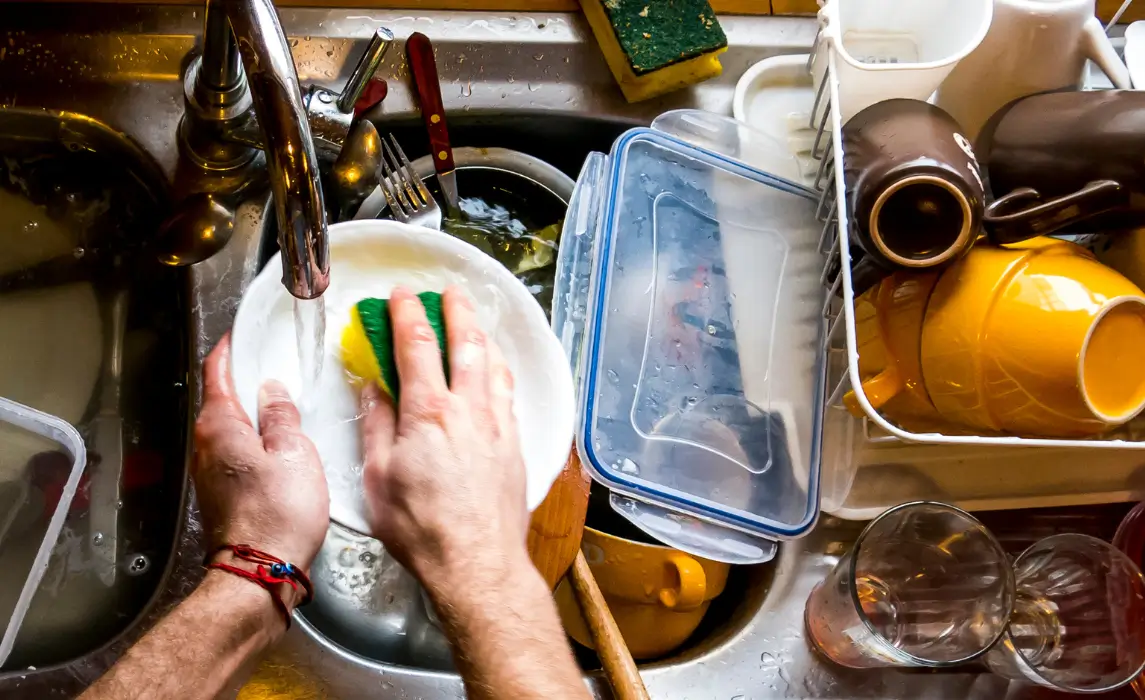
If you have a double sink, fill one side with hot water that's as warm as you can comfortably handle, then add about a tablespoon of dish soap. Fill the other side with clean hot water for rinsing, though you can also use cold rinse water to save energy since it works just as well for removing soap. For those with a single sink, the setup is slightly different: fill the sink with hot soapy water and keep a large bowl, pot, or dishpan filled with clean rinse water on the counter beside you. Alternatively, you can rinse under running water, though this approach uses more water overall.
The soapy water should have visible bubbles but shouldn't be overflowing with foam. Too much soap wastes product and makes rinsing harder, while too little means you're essentially just rinsing with hot water. If you're not seeing any bubbles, add a bit more soap until you achieve that sweet spot of light, visible bubbles throughout the water.
Wash in the Right Order
The sequence in which you wash your dishes matters more than you might think, as it keeps your wash water usable for longer. Start with glassware and cups since these are typically the least greasy items. Wash the inside thoroughly with your sponge, then move to the outside, paying special attention to the rim where lipstick or lip balm might be lingering. For narrow bottles or tall glasses, a bottle brush is invaluable for reaching the bottom.
Next, move on to plates, bowls, and serving dishes. Scrub both sides thoroughly, getting into any ridges or patterns in the dishware. The underside of plates often has a raised ring that traps food and grease, so don't forget to give it attention. After the dishware, tackle the utensils. Wash forks by running your sponge through the tines, ensuring you get between each prong. For spoons, scrub both the bowl and handle. Knives deserve special attention and should be washed one at a time, carefully, with the blade facing away from you. Never leave knives submerged in soapy water where you can't see them.
Cooking utensils and serving pieces come next, including spatulas, wooden spoons, tongs, and serving forks. Pay careful attention to joints and hinges where food particles can hide. Save pots, pans, and baking dishes for last, as these are typically the greasiest and most heavily soiled items. If something has badly stuck-on food, let it soak while you wash everything else. For burnt-on food, adding a tablespoon of baking soda or even a dryer sheet to the soak water can help loosen stubborn residue.

The Washing Technique
For each item, submerge it in the soapy water and use your sponge or cloth to scrub all surfaces in a circular motion. Most items need only 5-10 seconds of active scrubbing, though heavily soiled pieces may require more attention. There are several areas that people commonly miss: the underside of plate rims, handles of mugs and pots, the threads on jar lids, the crevices where knife handles meet blades, the bottom edges of pots and pans, and the inside of measuring cup spouts.
When you encounter stuck-on food, resist the urge to scrub aggressively right away. Instead, let the item sit in the hot soapy water for 2-3 minutes, then try again. The combination of heat and soap will do most of the work for you, saving your energy and preventing potential damage to your dishes or cookware.
Rinse Completely
Rinsing is where many people cut corners, but it's a step that truly matters. Soap residue can affect food taste, leave streaks on glassware, and build up over time to create a cloudy film on your dishes. If you're using a rinse sink or basin, dip each item and rotate it, ensuring water contacts all surfaces. You should see the suds wash away, and the item should feel clean rather than slippery. If you're rinsing under running water, hold the item at an angle so water flows over all surfaces, carrying away all traces of soap.
Dry and Put Away
Air drying is the most hygienic option for your dishes. Place items on a dish rack with adequate space between them for air circulation, positioning glasses and bowls upside down so water drains rather than pooling inside. Dishes typically air dry completely in 30-60 minutes, depending on humidity and air flow in your kitchen.
Towel drying is faster but requires a clean, dry dish towel,not the one you've been using to wipe counters. Dish towels should be changed daily since damp towels breed bacteria. When towel drying, use a gentle rubbing motion rather than aggressive scrubbing, which can scratch dishes. For knives and wooden items that shouldn't sit in water or air dry for extended periods, towel dry immediately and put away to prevent damage or warping.
Advanced Techniques and Solutions
Dealing with Specific Challenges
Different types of dishes and cookware present unique challenges that benefit from specialized approaches. For greasy pans, add a splash of white vinegar to your wash water, as it cuts through grease more effectively than soap alone. When dealing with extremely oily residue, wipe out excess grease with a paper towel before washing to keep your wash water cleaner.
Water spots on glassware occur when minerals in hard water dry on the glass surface. To prevent them, add a splash of white vinegar to your rinse water, or dry glasses immediately with a microfiber cloth. If your glasses have already developed a cloudy appearance from soap buildup or hard water deposits, soak the affected glasses in a solution of equal parts white vinegar and warm water for 15 minutes, then wash normally.
Plastic containers that have developed stains or odors need special treatment beyond regular washing. After washing normally, place them in direct sunlight for 2-3 hours, as UV light naturally bleaches stains and kills odor-causing bacteria. For persistent smells, scrub with a paste made from baking soda and water before the sun treatment.
Cast iron and carbon steel pans require special care to maintain their seasoning. Don't use soap, as it strips away the protective layer you've worked to build up. Instead, scrub with coarse salt and a small amount of water, rinse briefly, then dry immediately over low heat on the stove to prevent rust. Apply a thin layer of oil while the pan is still warm to maintain the seasoning.
Wooden cutting boards and utensils should be washed quickly with soapy water and dried immediately,never let them soak, as this can cause warping and cracking. Once a month, sanitize boards by rubbing them with coarse salt and half a lemon, then rinse and dry thoroughly. Non-stick cookware demands gentle treatment: use only soft sponges, never abrasive scrubbers that can damage the coating. If food is stuck, soak with warm soapy water rather than scrubbing hard.
Water Temperature Strategy
Starting with the hottest water you can handle,ideally around 110-120°F (43-49°C),makes a significant difference in cleaning effectiveness. This temperature range effectively dissolves grease and kills most bacteria without being painful to work with. As you work through your dishes, the water naturally cools. When it becomes lukewarm, drain some out and add fresh hot water to maintain cleaning power. Cold or cool water simply doesn't cut grease; instead, it causes grease to solidify and redistribute onto your supposedly clean dishes.
However, extremely hot water isn't necessary for rinsing since you're just removing soap rather than grease. Cool rinse water works fine and saves energy, making it a smart choice for the environmentally conscious dishwasher.

Read Related Article: Best Kitchen Color Ideas & Schemes to Inspire You. Read More
The Pre-Soak Strategy
For items with dried or baked-on food, immediate soaking saves enormous effort later. As soon as you're done cooking or eating, fill the dirty pot or pan with hot water and a squirt of dish soap, then let it sit while you eat or relax. This simple habit transforms what would be a difficult scrubbing session into an easy wipe-down.
You can boost the effectiveness of soaking by adding specific ingredients. Baking soda, at 1-2 tablespoons, works wonders on burnt-on food. Surprisingly, dryer sheets added to soak water help release stuck-on cheese or starches. For extremely stubborn baked-on messes, a small amount of dishwasher detergent can be effective. White vinegar helps with mineral deposits and hard water stains. Most stuck-on food will wipe away easily after a 20-30 minute soak, though severely burnt items may need to soak overnight.
Creating an Efficient System
If you only have one sink or limited counter space, you can create an effective washing station using a large bowl or dishpan for either washing or rinsing. Some people prefer washing in the basin and rinsing in the sink, while others do the opposite. Experiment to find what feels natural to you and fits your kitchen layout.
The assembly line approach can significantly speed up the process: wash all items first, placing them in the rinse water or on the counter, then rinse everything at once. This method is faster than washing and rinsing each item individually, and it helps you develop a rhythm. By starting with the cleanest items and working toward the dirtiest, with proper sequencing you can often wash an entire meal's worth of dishes with one sink of water, minimizing the need for water changes.
Common Mistakes and How to Fix Them
One of the most common errors is using too much or too little soap. If you have mountains of bubbles, you're using too much, which wastes soap and makes rinsing tedious. If water looks clear with no bubbles, you're using too little, and you're basically just rinsing with hot water. The sweet spot is light, visible bubbles throughout the water.
Letting dishes pile up for days creates exponentially more work for yourself. Food that dries on dishes becomes much harder to remove,what would take 5 seconds to wipe off fresh might take 5 minutes of soaking and scrubbing later. If you can't wash immediately, at least give dishes a quick rinse to prevent food from cementing itself to the surface.
Washing knives carelessly is both inefficient and dangerous. Never pile knives with other dishes or submerge them in murky soapy water where you can't see them. Wash them individually, carefully, with the blade facing away from you, then dry and put away immediately to prevent accidents and maintain the blade's edge.
Using dirty sponges is another widespread mistake. Sponges harbor bacteria and start to smell after a few days of use. Sanitize them daily by microwaving a damp sponge for 1-2 minutes (being careful when removing it, as it will be extremely hot) or running it through the dishwasher. Even with daily sanitizing, replace sponges entirely every 1-2 weeks to maintain proper hygiene.
Overloading the drying rack prevents dishes from air drying properly. When dishes touch each other, water gets trapped between items, leading to water spots, odors, or even mildew growth. Always leave adequate space between items for air circulation. Finally, washing in cold water is perhaps the most common and most detrimental error. Grease doesn't dissolve in cold water,it just moves around, leaving a greasy film even on supposedly clean dishes. Always use hot water for the actual washing.
Time-Saving Strategies
One of the most effective time-saving strategies is washing as you cook. Fill a large pot or the sink with hot soapy water before you start cooking, and as you finish with cutting boards, mixing bowls, or utensils, quickly wash them. By the time dinner is served, most of your cleanup is already done, leaving you free to relax after the meal.
Sometimes the minimal wash approach makes the most sense. If you only need a few clean dishes right now, wash only those items. It's better to wash three items thoroughly than rush through twenty poorly, potentially having to rewash them later. Using fewer dishes in the first place also makes a real difference. Use the same cutting board for vegetables then proteins (rinsing between), reuse measuring cups for similar ingredients, and serve directly from cooking pots for casual meals.
When a stubborn pan needs soaking, use that time productively by washing everything else. You're making use of the wait time rather than standing around, and by the time you've finished the other dishes, the soaking pan will be ready for an easy final wash.

Read Related Article: Four Different Types of Wine in Hosting: A Guide to Perfect Pairings
Learn the four essential types of wine for hosting and how to pair each one perfectly to elevate any meal or gathering.
Read MoreHygiene and Safety Tips
Maintaining proper hygiene in your dishwashing routine extends beyond just cleaning the dishes themselves. Replace sponges and dishcloths regularly,even with daily sanitizing, sponges should be replaced every 1-2 weeks. Dishcloths can last longer but should be washed in hot water after each use to prevent bacterial growth.
Always dry your hands before handling knives or reaching for items on high shelves. Wet, soapy hands slip easily, creating unnecessary risk of cuts or breakage. If you drop a glass and it breaks in the sink, resist the urge to reach in blindly. Drain the water first so you can see all the pieces, then pick them up with a damp paper towel rather than your bare hands to avoid cuts.
Using a cutting board or thick towel as a cushion in your sink when washing delicate glassware can prevent breakage if you accidentally drop something. This simple precaution has saved countless wine glasses and heirloom dishes from an untimely end.
The Environmental Angle
Hand-washing uses less energy than running a dishwasher for partial loads, but modern dishwashers are actually more water-efficient when fully loaded. The average person uses 27 gallons of water washing dishes by hand, while an efficient dishwasher uses only 3-5 gallons per load. However, if you're committed to hand-washing or don't have access to a dishwasher, there are several ways to minimize water waste.
Don't let the water run continuously while scrubbing,this is one of the biggest sources of waste. Use a rinse basin instead of running water, and only change wash water when it's truly dirty, not after every few items. Scraping dishes well before washing keeps water cleaner longer, allowing you to wash more dishes with the same basin of water.
Making It Easier on Yourself
If you find hand-washing tedious, there are ways to make the experience more pleasant. Play music, listen to a podcast, or use the time to think through your day. Many people find the repetitive motion meditative, a rare opportunity for their hands to be busy while their mind wanders or processes the day's events.
If you have sensitive skin, wearing rubber gloves makes a significant difference in comfort. Modern gloves are thin enough to maintain dexterity while protecting your hands from hot water and harsh soaps. Consider the ergonomics of your sink as well,if you're tall and find yourself hunching over, place a cushioned mat under your feet to encourage better posture and reduce back strain during longer washing sessions.
When to Stop and Start Fresh
Knowing when to change your water is an important skill. If your wash water becomes greasy or full of food particles before you're finished, don't push through. Drain it and start with fresh hot soapy water, as washing dishes in dirty water just redistributes grime rather than removing it. Similarly, if your sponge starts to smell or fall apart mid-wash, replace it immediately. A clean sponge makes the job easier and more effective, and there's no point in spreading bacteria around on your clean dishes.
The Bottom Line
Good dish-washing isn't about perfection,it's about developing a system that works for your space and schedule. The core principles are straightforward: hot water, proper soap amount, clean-to-dirty order, thorough rinsing, and complete drying. Everything else is just optimization based on your personal preferences and kitchen setup.
With practice, washing dishes becomes quick and automatic. Most people can clean a full dinner's worth of dishes in 10-15 minutes once they've developed an efficient rhythm. It's one of those life skills that seems mundane but makes daily life run more smoothly when done well. The key is finding your own flow, the sequence and techniques that feel natural to you, and then making it a consistent habit that requires minimal mental energy while delivering consistently clean results.

Read Related Article: Types of Barware Glasses: Essential Guide for Every Home Bar
Discover the essential types of barware glasses every home bar needs, plus tips on choosing the right glass for each drink.
Read MoreFrequently Asked Questions
Even with a solid dishwashing routine, certain questions come up regularly. Here are answers to some common concerns that didn't fit neatly into the main guide but are worth addressing.
Can I wash dishes with cold water if I add more soap?
No, adding more soap won't compensate for using cold water. The issue is the chemical properties of grease and fat, which solidify at cooler temperatures. Cold water causes grease to congeal and stick to surfaces rather than dissolve, essentially moving it from one dish to another. Hot water around 110-120°F melts grease on contact, allowing soap to emulsify and remove it properly. If your hot water heater isn't working, lukewarm water is the minimum acceptable temperature, but truly cold water will leave invisible grease residue no matter how much soap you use.
How do I prevent my hands from getting wrinkled and dried out from frequent dishwashing?
The most effective prevention is wearing rubber or nitrile gloves, which modern versions make thin and flexible enough to maintain good grip. If you prefer washing without gloves, apply a barrier cream or petroleum jelly before washing, then moisturize immediately after while your hands are still slightly damp. Keep hand cream by the sink as a reminder. You might also switch to a gentler, moisturizing dish soap formula, though these may not cut grease as effectively. For severe dryness, apply thick hand cream before bed and wear cotton gloves overnight.
Is it sanitary to wash baby bottles and pet bowls with regular dishes?
From a sanitary perspective, if you're using hot soapy water and rinsing thoroughly, baby bottles and pet bowls can be washed alongside regular dishes without cross-contamination concerns. The hot water and soap effectively kill bacteria and remove residue. However, many people prefer washing these separately for peace of mind. For baby bottles, the main concern is thoroughly cleaning small parts like nipples and valves with a bottle brush. Some parents wash baby items first in fresh water, then proceed with regular dishes. For pet bowls, especially if your pet eats raw food, washing last or separately makes sense. A practical approach is washing pet bowls last in the same water, then giving them an extra-thorough rinse.
.webp)
.webp)
.webp)