Read Related Article: Different Types of Blenders for Your Kitchen: Best Blender Guide
Discover the different types of blenders for your kitchen. Learn the best blender options for smoothies, soups, sauces, and everyday cooking.
Read More
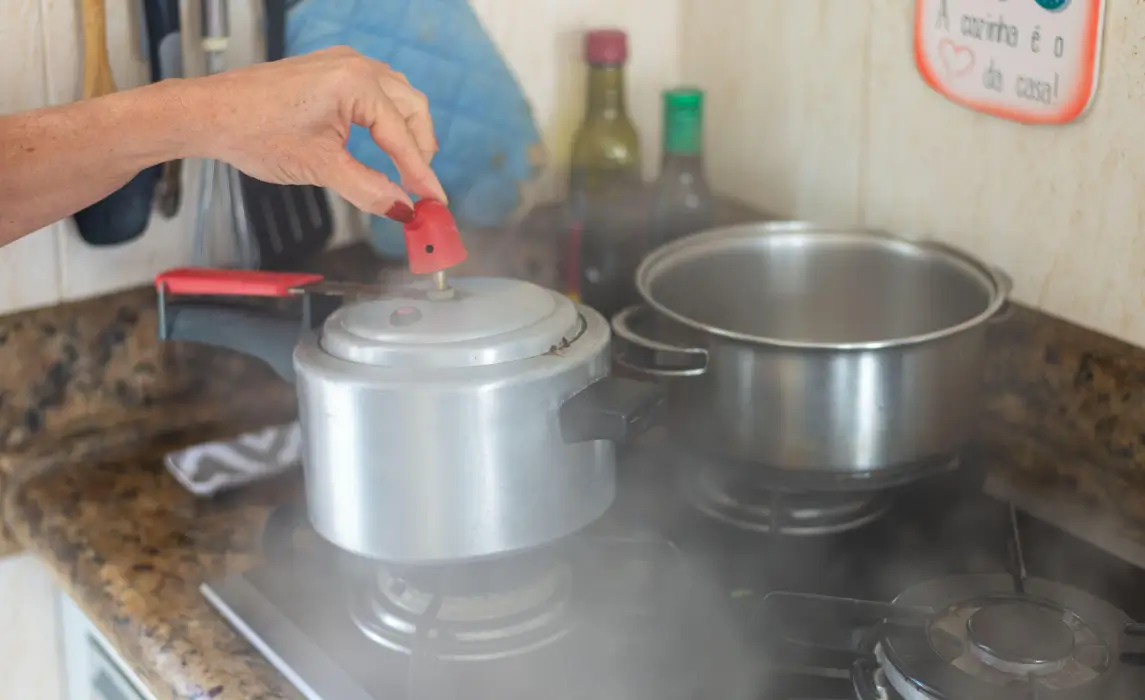

Use high heat, cook ingredients in batches to avoid overcrowding, and keep ingredients moving in the pan for even cooking.
Cook sliced onions slowly over low heat with a bit of oil or butter, stirring occasionally, until deeply browned and sweet.
Use a meat thermometer to check internal temperatures: 145°F for pork, 160°F for ground meats, and 165°F for poultry.
There's a moment every host knows well, you're still in the kitchen when your guests arrive, your hair slightly frazzled, stirring something that refuses to be done. That's exactly the problem a pressure cooker solves. It doesn't just speed up cooking; it fundamentally changes how you entertain by compressing hours of active kitchen time into minutes of hands-off waiting.
But here's what most buying guides won't tell you: not every pressure cooker is built for the same kind of host. The model that works brilliantly for a laid-back potluck host will frustrate someone who wants chef-level precision for a dinner party. Choosing the right type means matching the cooker to your actual hosting style, how often you entertain, how many people you typically feed, and how much of your hosting identity lives in the kitchen versus the living room.
This guide breaks that down clearly, without fluff.
If you're the type of host who considers cooking part of the entertainment itself, who narrates what's happening in the kitchen and considers a perfectly braised short rib a point of personal pride, a stovetop pressure cooker is your tool.
Stovetop models reach higher pressure levels (typically 13–15 PSI) compared to most electric models (which cap around 10–12 PSI). That difference matters more than it sounds. Higher pressure means higher internal temperature, which translates to faster cooking times and, critically, better browning and deeper flavor development in braises and stocks, something electric models simply can't replicate at the same level.
The tradeoff is that they require your attention. You need to monitor the heat, manage the pressure manually, and time the release. For an experienced cook, this is intuitive. For someone juggling a guest list, drinks, and a three-course menu simultaneously, it can feel like one task too many.
Where stovetop cookers genuinely shine for entertaining: Braised meats (short ribs, lamb shanks, oxtail) that would normally take 3–4 hours are done in 45 minutes, with richer results. Stocks and consommés that typically simmer all day are ready in 90 minutes. Whole chickens cook fall-off-the-bone tender in under 30 minutes. These are impressive, restaurant-quality results that make a dinner party feel intentional and elevated.
The electric pressure cooker, most famously the Instant Pot, changed home entertaining because it removed the single biggest friction point: the need to stay in the kitchen. You set it, walk away, and it holds your food at the perfect serving temperature until you're ready. That's not a minor convenience. That's a hosting superpower.
The key feature here isn't just pressure cooking, it's the keep-warm function, which maintains food safely between 145°F and 172°F for up to 10 hours. For buffet-style entertaining, this is transformative. You can have pulled pork, chili, or mulled wine staying perfectly warm on the counter while you're taking coats, pouring drinks, and actually talking to your guests.
Electric models are also inherently multi-functional. Most can sauté, slow cook, steam, and in some models, air fry, which means one appliance handles multiple courses or components of a meal without additional pots and pans. Fewer dishes is its own reward when you're hosting.
The honest limitation: electric pressure cookers top out around 10–12 PSI, which means slightly longer cook times than stovetop models and less caramelization in braises. They're also larger and heavier, which matters if your kitchen counter space is limited.
Discover the different types of blenders for your kitchen. Learn the best blender options for smoothies, soups, sauces, and everyday cooking.
Read MoreThis is where most buyers make a mistake, they buy based on what they cook daily, not what they cook when entertaining. Those are often very different volumes.
1–4 quart (small): Ideal for appetizers, dips, sauces, or individual components of a larger meal. A 4-quart cooker can make a full batch of hummus, a creamy dip, or a side dish for four. Useful as a secondary cooker alongside a larger one.
5–8 quart (medium): The sweet spot for most home entertainers. A 6-quart cooker handles a whole chicken, a 3-pound pot roast, or a pasta dish for 6–8 guests comfortably. This is the size most households should start with.
10+ quart (large): If you regularly host 10 or more people, or you want to do batch cooking ahead of a party, this is where you need to be. A 10-quart can handle a 6-pound brisket, a full seafood boil, or a double batch of chili. It's also the minimum size if you're doing whole-bird pressure canning.
Practical note: Pressure cookers should never be filled beyond two-thirds capacity for most foods (and half capacity for liquids and foods that foam, like grains or legumes). Factor that into your math, a 6-quart pot holds roughly 4 quarts of actual food when entertaining.
Pressure Canners: These aren't just for homesteaders. For a host who loves giving edible gifts, a pressure canner (like the All American 921 or Presto 23-Quart) lets you preserve homemade jams, pickled vegetables, or infused oils in shelf-stable jars. A jar of house-made jalapeño peach jam or spiced pickled carrots is a genuinely memorable party favor that costs almost nothing to produce at scale. Note: pressure canners require significantly more counter space and are not interchangeable with pressure cookers for regular cooking.
Pressure Fryers: Primarily commercial equipment, but home-adapted versions exist (KFC's original fried chicken recipe was developed on a commercial pressure fryer). They produce exceptionally moist, crispy fried chicken in a fraction of the time of conventional frying. If fried chicken or wings are a signature dish at your gatherings, this is worth researching, though they carry higher safety requirements and are not casual appliances.
Mini Pressure Cookers (2–3 quart): Often overlooked, but genuinely useful for entertaining. Use them for individual lava cakes, custards, or crème brûlée bases, desserts that impress but are typically finicky. They're also ideal for keeping a sauce, gravy, or glaze warm at serving temperature while the main cooker handles the entrée.
Most pressure cooker reviews focus on features useful for everyday cooking. Entertaining creates a different set of priorities.
Delay start timer: This is underused and underappreciated. Program your cooker to begin cooking an hour before guests arrive, so your food finishes naturally right when you need it. Not all models have this, confirm before buying if this matters to you.
Keep-warm duration and temperature range: Some models hold warm for 4 hours, others for 10. For a party that stretches into the evening, longer is obviously better. Check whether your model has adjustable warm temperatures, low (145°F) for delicate items like custards, high (172°F) for heartier dishes like stews.
Steam release design: Traditional stovetop models release steam with an audible hiss that punctuates conversation at the worst moments. Most modern electric models have a sealed or dampened release that's significantly quieter. If your kitchen opens to your entertaining space, this matters more than most people expect.
Pot-in-pot (PIP) cooking: A less-known technique where you cook two components simultaneously, rice in a bowl nested inside the main pot, while a stew cooks around it. This effectively doubles what one pressure cooker can produce at once, which is genuinely useful when you're feeding a crowd from a limited appliance lineup.
Inner pot material: Stainless steel inner pots are more durable and don't retain flavors between uses, which matters when you're cycling through multiple dishes in one evening. Non-stick surfaces are easier to clean but degrade over time and can't be used for sautéing at high heat.
Discover the best buffet food warmer trays and electric buffet servers to keep dishes warm for parties, holidays, and gatherings.
Read MoreRather than a generic list of "pressure cooker recipes," here are specific dishes chosen because they deliver a high impression-to-effort ratio, things that taste like they took far longer than they did.
Stovetop (high-pressure, chef-forward results):
Electric (hands-off, buffet-friendly results):
Large capacity (crowd-scale cooking):
The most experienced entertaining hosts don't think of a pressure cooker as one appliance doing one job. They think of it as a way to restructure when kitchen labor actually happens.
Use it for make-ahead components, not just day-of cooking. A pressure cooker is exceptional at stock, confit, and braises, all of which improve with 24–48 hours of rest. Make your braised lamb two days before the party, refrigerate it, and reheat gently. The result is better, and your day-of stress drops significantly.
Run two cookers in sequence, not simultaneously. If you only own one, plan your menu so the pressure cooker handles the component with the longest passive cook time first (usually a protein), then use it a second time for a starch or vegetable while the protein rests. Two-pass cooking from a single appliance is a real strategy, not a compromise.
Pair with a slow cooker for extended keep-warm. If your electric pressure cooker's keep-warm tops out at 4 hours, transfer the finished dish to a slow cooker set to "warm" for longer service windows. This frees the pressure cooker for other uses while maintaining food safety.
Entry-level ($50–$100): The Instant Pot Duo 7-in-1 sits firmly here and is genuinely capable. At this price, you get reliable pressure cooking and a decent keep-warm function. What you don't get: precise pressure control, a delay start, or Wi-Fi monitoring. For occasional hosts (4–6 times per year), this is more than enough.
Mid-range ($100–$200): This is where the feature set starts to matter. Models like the Breville Fast Slow Pro and the Instant Pot Pro Plus add dual-pressure settings, longer keep-warm ranges, better sauté surfaces, and smarter lid designs. For hosts who entertain monthly or bi-monthly, this investment pays back in flexibility and consistency.
High-end ($200–$400+): Fissler stovetop models and the All-Clad electric pressure cooker live here. The difference is primarily build quality, tri-ply stainless steel, better pressure regulation, longer product lifespans, and in the case of stovetop models, higher maximum PSI. For a dedicated home cook who entertains regularly and wants tools that last decades, this is the right range. Don't buy a high-end pressure cooker if you entertain infrequently, the mid-range performs nearly as well for most entertaining tasks.
If you want to be present with your guests, buy an electric pressure cooker with a reliable keep-warm function. The Instant Pot Pro Plus or Breville Fast Slow Pro are the clearest choices.
If you want restaurant-quality results and you're comfortable in the kitchen, a stovetop model like the Fissler Vitaquick or Kuhn Rikon Duromatic will outperform anything electric.
If you regularly host 10+ people, prioritize capacity first, a 10-quart electric model or a large stovetop unit. Everything else is secondary.
If you entertain infrequently but want to do it well, a 6-quart mid-range electric is the most forgiving, versatile starting point. You can grow into a second unit later once you understand how you actually use it.
A pressure cooker doesn't just speed up cooking, it shifts the window of effort from the day of the party to the day before, from active tending to passive waiting, and from stress to confidence. That shift is what makes it a hosting tool, not just a kitchen appliance.
Still weighing your options? These are the questions most hosts ask before buying, answered without the runaround.
Yes, but strategically. A single pressure cooker works best when used in sequence, cook the protein first, rest it, then use the same pot for a side or sauce. For larger gatherings, running two units simultaneously (one for the main, one for a side) is the most efficient approach.
Electric models are designed for unattended use, they automatically switch to keep-warm once the cooking cycle ends and have built-in pressure and temperature safeguards. Stovetop models are not; they require someone monitoring the heat. If you plan to step away, always use an electric model.
A 6-quart is the practical minimum for a main dish serving 8. Remember the two-thirds fill rule, a 6-quart pot holds about 4 quarts of usable food. For a heartier menu with large cuts of meat or bone-in proteins, size up to an 8-quart to avoid crowding, which affects both cook time and texture.
.webp)
.webp)
.webp)