Read Related Article: Tea Party Ideas: Elevating Your Elegant Tea Party Gathering
Discover tea party ideas to elevate your elegant tea party gathering, from curated tea selections to stylish setups and memorable hosting touches.
Read More

Use high heat, cook ingredients in batches to avoid overcrowding, and keep ingredients moving in the pan for even cooking.
Cook sliced onions slowly over low heat with a bit of oil or butter, stirring occasionally, until deeply browned and sweet.
Use a meat thermometer to check internal temperatures: 145°F for pork, 160°F for ground meats, and 165°F for poultry.
There's a quiet confidence that comes with serving tea at a gathering. Anyone can open a bottle of wine. But when you pull out a clay teapot, brew a proper oolong, and explain why it tastes like orchids, people pay attention.
Tea is the world's second most consumed beverage after water, yet most hosts treat it like an afterthought: a box of generic bags tucked beside the coffee maker. This guide exists to change that. Whether you're hosting a bridal shower for twelve or a dinner party for four, knowing how to choose, brew, and present the right tea will quietly elevate everything about the experience.
A quick note before we start: all "true" teas, white, green, yellow, oolong, black, and pu-erh, come from the same plant, Camellia sinensis. What separates them isn't the plant; it's how the leaves are processed after harvest. Oxidation levels, drying methods, and aging are what create six dramatically different cups from one species. Herbal "teas" (tisanes) are a separate category entirely, no Camellia sinensis involved.
White tea is the least processed of all true teas. The leaves, typically young buds and first-flush tips, are simply withered and dried. No rolling. No firing. No oxidation beyond what nature takes. The result is extraordinarily delicate: pale gold in the cup, with floral, honeyed, almost melon-like notes.
When to serve it: White tea belongs at small, unhurried occasions, a bridal shower, a quiet afternoon with close friends, a slow weekend brunch. Its subtlety gets lost in loud, crowded settings. Serve it to guests who actually want to taste what's in their cup.
Varieties to know:
Hosting tip: Serve white tea in glass cups or a glass teapot. The pale, luminous color of the liquor is part of the experience. Water temperature matters enormously here, never use boiling water. Aim for 75–80°C (167–176°F). Boiling water will destroy the delicate compounds and make it taste flat and slightly bitter.
Food pairings: Cucumber sandwiches, fresh melon, ricotta crostini, honey-drizzled brie. Avoid anything strongly spiced or smoked, it will overwhelm the tea completely.

Discover tea party ideas to elevate your elegant tea party gathering, from curated tea selections to stylish setups and memorable hosting touches.
Read MoreGreen tea is withered briefly, then heat-treated quickly, either steamed (Japanese style) or pan-fired (Chinese style), to halt oxidation and lock in chlorophyll. That's why it stays green. The difference between Chinese and Japanese green teas is more significant than most people realize, and choosing the right one for your gathering matters.
Chinese green teas (like Dragonwell/Longjing or Bi Luo Chun) are pan-fired, giving them a toasty, nutty edge alongside their vegetal notes. They're rounder and more forgiving. Japanese green teas (like Sencha or Gyokuro) are steamed, which produces a more intense, marine, almost savory quality, umami in a cup. They're polarizing in the best way.
Matcha deserves its own mention. Shade-grown, stone-ground, and whisked rather than steeped, matcha is green tea's most dramatic expression. Whisking a bowl of matcha tableside is a genuine hosting moment, it's visual, ritualistic, and delicious. Use ceremonial-grade matcha for drinking straight; culinary grade works fine in lattes or baked goods. Don't confuse the two, ceremonial matcha has a vibrant green color and smooth, slightly sweet flavor; culinary matcha tends to be more astringent and dull in color.
When to serve it: Casual get-togethers, wellness-themed brunches, outdoor summer parties (iced). Green tea's familiarity makes it universally approachable, and its range means you can go as casual or sophisticated as the occasion calls for.
Food pairings: Matcha pairs beautifully with red bean, mochi, and French macarons, the slight bitterness cuts through sweetness perfectly. Chinese greens go well with seafood appetizers, light salads, and delicate pastries. Sencha is excellent alongside sushi or dumpling platters.
Cold brew trick: Cold-brewing green tea (steeping loose leaves in cold water overnight in the refrigerator) produces a naturally sweeter, less astringent cup with zero bitterness. No heat required. This is one of the easiest ways to offer something impressive at a warm-weather event.
Yellow tea is produced in tiny quantities, almost exclusively in China, and most people have never encountered it. The process is nearly identical to green tea, with one additional step: after firing, the leaves are wrapped and allowed to "smoulder" (called men huan, or sealing yellow) in a warm, humid environment. This slow, low-temperature oxidation mellows out the grassy sharpness of green tea into something softer, smoother, and slightly malty.
Junshan Yinzhen, from Dongting Lake in Hunan province, is the most famous variety. When steeped in a tall glass, the buds famously stand upright and dance as they absorb water, which makes for a genuinely theatrical moment at the table.
When to serve it: Yellow tea is a conversation piece. Save it for a small dinner party where you want to introduce something most guests have never seen or tasted. Have a short story ready, not a lecture, just a sentence or two about where it's from and why it's rare. People love being handed something uncommon with a bit of context. It signals that you put thought into the evening.
Hosting note: Yellow tea can be difficult to source outside of specialty tea shops or importers. If you're in the Philippines, look for specialty tea shops in BGC or Makati that carry artisan Chinese teas, or order from reputable importers online. Authenticity matters, a lot of "yellow tea" on the mass market is actually mislabeled green tea.
If there's one tea category that rewards a host the most for a modest investment of knowledge, it's oolong. Oolong is partially oxidized, anywhere from 15% to 85%, and that spectrum produces an astonishing range of flavors under one category. Light oolongs taste floral and buttery. Heavily roasted oolongs taste like toasted nuts and dark honey. Both are technically oolong.
Key varieties for entertaining:
When to serve it: Oolong is the most adaptable tea for entertaining because the variety means you can match it to almost any occasion. Light oolongs suit spring brunches and afternoon gatherings. Roasted oolongs work beautifully on cool evenings and after dinner. Unlike black tea, most oolongs can be steeped multiple times (3–5 infusions from the same leaves), which is an elegant detail to demonstrate at the table.
The gongfu approach: Serving oolong gongfu-style, using a small clay yixing pot or gaiwan, high leaf-to-water ratio, and very short successive steepings, turns tea into a ritual your guests can participate in. Each infusion tastes slightly different, which gives the table something to discuss. You don't need to be an expert to do this; you just need to try it a few times before the event.
Food pairings: Light oolongs pair well with delicate pastries, butter cookies, and soft cheeses. Roasted oolongs go beautifully with charcuterie, roasted nuts, aged cheddar, and dark chocolate.
Black tea is fully oxidized, which gives it that characteristic amber-to-dark-red color and bold, robust flavor. It's the most widely consumed tea in the Western world, and for a host, that familiarity is an asset, it's the tea most guests will feel comfortable reaching for. But there's a significant difference between a good black tea and a bag of generic grocery store tea.
Varieties worth knowing:
When to serve it: Large gatherings, holiday parties, afternoon events, anytime you need to brew for 10+ people without worrying about whether the tea can handle it. Black tea is forgiving in large batches and holds well in a thermal carafe.
Building a proper tea station: If you're serving black tea at a large event, set up a station with hot water, the tea, and condiments in small labeled dishes, whole milk, oat milk (for dairy-free guests), raw honey, white sugar, and fresh lemon wedges. This gives guests agency and makes the setup feel intentional rather than thrown together.
Tea cocktails: Cold-brewed black tea (specifically Earl Grey or Ceylon) is an excellent cocktail base. Earl Grey + gin + honey + lemon is a classic combination that works beautifully as a signature evening drink. Brew the tea cold, then batch the cocktail ahead so you're not mixing drinks all night.
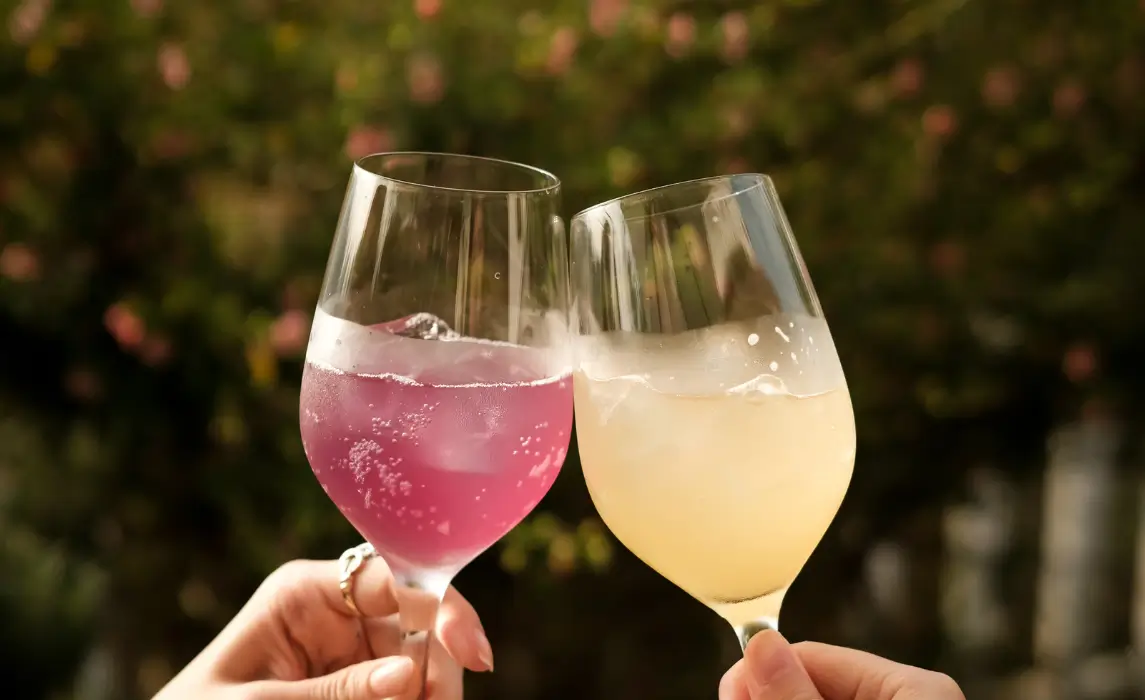
Discover good spring cocktails with the best spring drink recipes, featuring fresh flavors, light ingredients, and refreshing sips perfect for the season.
Read MorePu-erh is fermented tea, the only category where microbial activity plays a central role in flavor development. It's produced in Yunnan, China, and it can be aged for years or decades, which is why serious collectors treat it similarly to wine or whiskey.
There are two types: Sheng (raw) pu-erh, which is pressed into cakes and aged slowly over years, developing increasing complexity, and Shou (ripe) pu-erh, which undergoes an accelerated fermentation process to mimic aged sheng. Shou pu-erh is earthy, smooth, and approachable. A young sheng can be intensely bitter and astringent; an aged sheng is smooth, complex, and often transformative.
For entertaining purposes, a well-sourced Shou pu-erh is your entry point. It's the style most guests can appreciate without prior pu-erh experience.
When to serve it: After dinner, as a coffee alternative. Pu-erh is known for its digestive properties, it's been consumed after heavy meals in China for centuries, and there's reasonable evidence supporting its role in aiding fat digestion. This is genuinely useful context to offer guests at the table. Many people who want to avoid caffeine late at night are surprised to learn that pu-erh, while caffeinated, has a calming, grounding quality that differs from coffee's jolt.
Food pairings: Aged cheese, dark chocolate (70% and above), walnuts, dried figs. Pu-erh's earthiness acts like a palate reset between rich bites.
The story angle: If you've sourced a pressed pu-erh cake, show it to guests before breaking a piece off to brew. The visual, a dense disc of compressed leaves, is striking and unfamiliar to most people, which immediately opens up conversation.
Not everyone drinks caffeine in the evening. Not everyone can. Herbal teas, technically "tisanes" since they contain no Camellia sinensis, are your tool for ensuring every guest has something warm and special to hold.
Chamomile: Mild, apple-like, slightly sweet. The classic wind-down tea. Excellent for evening gatherings when guests will be driving home or winding down.
Hibiscus: Tart, cranberry-like, jewel-red. Served iced, it's one of the most visually stunning drinks you can put in a glass. A hibiscus iced "tea" punch with sparkling water and a slice of orange is a non-alcoholic showpiece that doesn't feel like an afterthought.
Peppermint: Strong, cooling, palate-cleansing. Useful between courses at a dinner party and genuinely settling for the stomach. Brew it strong, weak peppermint tea is unimpressive.
Rooibos: Caffeine-free, earthy, slightly sweet, and red in color. South African in origin, it works as a base for a "red latte" (rooibos with steamed oat milk and a touch of vanilla) that appeals to guests looking for something warm and comforting without caffeine or dairy.
Hosting tip: Label herbal options clearly as "caffeine-free." Many guests won't ask, they'll just avoid the table. A small handwritten card next to each option costs almost nothing and removes a social friction point most hosts don't even realize exists.
The difference between a tea spread that impresses and one that overwhelms is curation. More options is not better. Two or three thoughtfully chosen teas, with clear labels describing the flavor and caffeine level, a proper kettle or two set to different temperatures, and a few small accompaniments, will outperform a cluttered table of fifteen tea bags every time.
Brewing white or green tea with boiling water is the single most common mistake. It extracts bitter compounds and kills the delicate aromatics that make those teas worth serving. A variable-temperature kettle solves this entirely and costs roughly the same as a standard one.
Batch brewing for larger groups: Most teas can be brewed in large quantities ahead of time and held in a thermal carafe for 30–45 minutes without significant degradation. Remove the leaves before carafe storage, leaving them in will over-extract the tea and make it bitter. Black and oolong hold best this way; white and green teas are more sensitive and better brewed fresh.
Don't over-steep: Set a timer. Green teas need 2–3 minutes. Black teas 3–4 minutes. White teas can go 4–5 minutes at the right temperature. Pu-erh, 3–4 minutes for the first infusion. Bitterness from over-steeping is avoidable and ruins a well-sourced tea.
Tea rewards the host who takes it seriously in proportion to the care given. The teas covered here range from easy-to-find (Assam, chamomile, matcha) to genuinely rare (yellow tea, aged pu-erh), but you don't need all of them. Start with one category you don't already know. Learn it well enough to talk about it naturally. Then add from there.
The guests who remember your table most clearly won't be the ones who drank the most, they'll be the ones who held an unfamiliar cup, asked what they were tasting, and learned something they didn't expect from an evening out. That's what good hosting actually looks like.
Two to three is the sweet spot for most events. One approachable option (a solid black tea or a crowd-friendly oolong), one that's slightly more interesting (a white tea or matcha), and one caffeine-free herbal option for guests who need it. Beyond that, choices become overwhelming and the setup starts to look cluttered rather than curated.
Yes, most teas hold well in a thermal carafe for 30 to 45 minutes, provided you remove the leaves immediately after steeping. Leaving the leaves in will over-extract the tea and make it bitter by the time guests reach for it. Black and oolong teas are the most forgiving for batch brewing. White and green teas are better served fresh if you can manage it, or cold-brewed the night before and kept refrigerated.
Start with a good loose-leaf Assam or Ceylon for your hot option, and a cold-brewed hibiscus tisane for something visually striking and caffeine-free. Both are easy to source, hard to mess up, and genuinely impressive when presented well. Once you're comfortable, add an oolong to the rotation, it's the tea most likely to make a guest say they've never tasted anything like it.
.webp)
.webp)