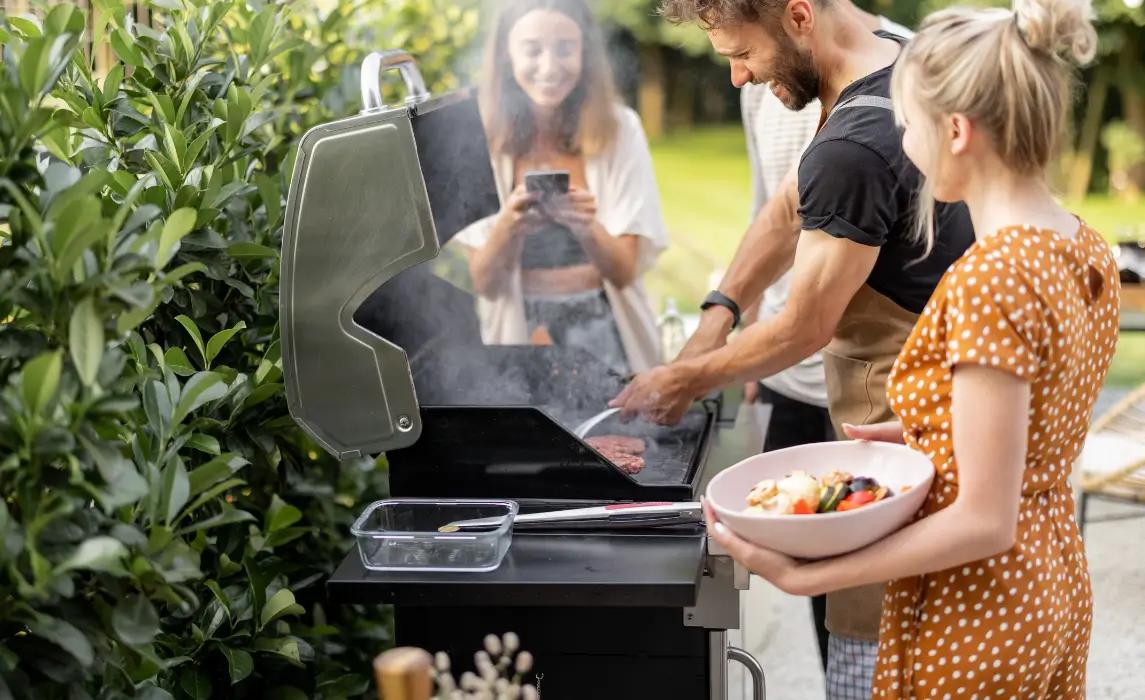
The moment you decide to smoke something for a party, a brisket, a pork shoulder, a rack of ribs, you've committed to a different kind of hosting day than a quick backyard cookout. Smoked meat runs on its own clock, not yours, and it doesn't care that guests are arriving at 6 while the brisket won't be ready until 7:30. A grill with a built-in smoker (or a grill and offset smoker in one unit) is what lets you run both jobs, the slow, unattended cook and the last-minute grilling everyone actually shows up expecting, without needing two setups and two sets of eyes.
This isn't a competition-BBQ buying guide. It's built around the actual hosting problem: staggered arrival times, one person managing the fire while also being the host, and food that needs to be ready and warm at the same time your guests are.
Why One Unit Beats Running a Grill and a Smoker Separately
If you've ever tried to manage a standalone smoker and a separate grill during the same party, you already know the issue, it's not the cooking, it's the attention split. You're checking two fire sources, refilling two fuel supplies, and mentally tracking two different timelines while also being a host. A combo unit consolidates that down to one thing to manage, which matters more than people expect once the party actually starts and you're pulled in five directions.
A few things worth knowing before you shop, since they matter more for hosting than for solo cooking:
Temperature range is the real spec to check, not burner count.
You need something that holds steady around 225–250°F for hours (for the smoke) and can also climb into searing territory for burgers or chicken thighs guests want quickly. Not every "grill and smoker" combo does both well, some are smoker-first and mediocre at direct grilling, and vice versa.
Fuel type changes how much attention the cook needs during the party.
Pellet units feed themselves and hold temperature automatically, which frees you up to actually mingle. Charcoal offset setups need periodic tending, adding fuel, adjusting vents, which is fine if you don't mind stepping away from guests every 45 minutes or so.
Reheat and hold matter more than most people plan for.
If the smoked meat finishes at 5 and dinner is at 6:30, you need a way to hold it warm without drying it out (wrapping in foil or towels inside a cooler works better than leaving it on the grill on low).
Placement matters for safety, not just convenience.
Any charcoal or pellet unit produces carbon monoxide and should run in an open, ventilated area, well away from siding, under an open sky rather than a fully enclosed porch, and never in a garage even with the door open. This is easy to forget when you're focused on layout for guests rather than the appliance itself.
Read Related Article: Outdoor Cooling Fan for Patio: How to Choose the Best Mist Fan & Cooling Solution
Find the best outdoor cooling fan for your patio. Learn how to choose the right mist fan, evaporative cooler, or outdoor cooling solution for hot days.
Read More
Roughly How Much to Plan For, Based on Guest Count
Buying guides rarely give real numbers here, so as a rough planning baseline for a mixed-food gathering (not an all-you-can-eat cookout):
- 8–10 guests: about 4–5 lbs of raw brisket or pork shoulder, or 2 full racks of ribs, plus whatever you're grilling fresh
- 15–20 guests: about 8–10 lbs of smoked meat, or 3–4 racks of ribs, split across smoking and direct grilling so people aren't all waiting on one cook
- Small/casual (4–6 guests): a single rack of ribs or a smaller cut is usually enough, this is where a compact grill without a smoker section, rather than a full combo unit, makes more sense
These numbers assume some shrinkage during a long cook (smoked meat typically loses 20–30% of its raw weight) and a spread that includes sides, not just meat.
Matching the Setup to How You Actually Host
You host often, want the meat to be the centerpiece, and don't mind checking on it occasionally. A pellet grill-smoker combo is the easier day-of experience, set the temperature, load the hopper, and check in periodically instead of tending a fire the whole time.
You want real wood/charcoal flavor and don't mind being more hands-on. An offset charcoal grill-and-smoker unit gives you two independent cooking zones (grill on one side, smoker chamber on the other) so you can sear food to order while something else smokes low and slow, but expect to manage the fire actively throughout the party.
You're hosting something small and casual, a few people, a porch, a picnic. A compact portable charcoal grill skips the smoker altogether and keeps things simple: quick to light, quick to cook, easy to clean up before guests even notice you were working.
Top Picks
Traeger Grills Pro 34 Electric Wood Pellet Grill and Smoker
Best for hosts who want to smoke, grill, and actually enjoy the party at the same time
This is a pellet grill, which means it self-feeds wood pellets through an auger and holds a set temperature automatically, closer to running an outdoor convection oven than babysitting a fire. That distinction matters most when you're hosting, because it's the difference between checking the grill every 45 minutes versus checking it once an hour while you're actually talking to guests.
- 884 sq. in. of total cooking space, enough for roughly 8 whole chickens, 7 racks of ribs, or around 40 burgers in one cook, genuinely useful capacity for a real party, not just a family dinner
- Digital controller holds temperature within about 15°F of your setting, from a low smoke setting up to 450°F, so the same unit handles an 8-hour brisket and a quick sear
- 18 lb. pellet hopper means you're not constantly refilling during a long cook, check it before the party starts and you likely won't think about it again until cleanup
- All-terrain wheels help if you need to reposition it around furniture or move it to a covered spot if weather turns
A small detail worth knowing if you're new to pellet grilling: the wood flavor comes from whatever pellets you load, and stronger woods aren't automatically better. Milder woods like apple or cherry work well for chicken and pork without overpowering them, while hickory or mesquite hold up better against beef. Mixing in a fruit wood is a common way to soften a heavier smoke flavor if you're cooking for guests who aren't used to it.
What we'd flag before you buy: this is a genuine investment-tier appliance, both in cost and in physical footprint (about 49"H x 53"W x 27"D), and it ships on a pallet requiring assembly, plan an afternoon, not twenty minutes, the first time you set it up. Pellets also run a recurring cost, roughly a 20 lb. bag every one to two cooks depending on how often you host.
See current listing →
Read Related Article: Best Labor Day BBQ Ideas at Home: Simple Tips for a Perfect Celebration
Find the best outdoor cooling fan for your patio. Learn how to choose the right mist fan, evaporative cooler, or outdoor cooling solution for hot days.
Read More
Royal Gourmet CC1830F Charcoal Grill with Offset Smoker
Best for hosts who want real charcoal flavor and don't mind tending the fire
This is a barrel-style charcoal grill with a separate offset smoker chamber attached to the side, meaning you can grill directly over charcoal in the main chamber while something else smokes independently in the offset box. That's a genuinely different setup than the Traeger: more hands-on, but also more traditional in flavor and lower in upfront cost.
- Roughly 811–824 sq. in. combined cooking space across the main grates, warming rack, and offset smoker, enough to feed 8–10 guests or cook up to around 34 burgers
- Two-level adjustable charcoal pan lets you raise or lower the coals relative to the food for better heat control, useful when you're going from searing to slower cooking within the same party
- Side charcoal access door and ash management make mid-cook cleanup and refueling more manageable without losing all your heat
- Front and bottom shelves give you a place to actually set serving trays and tools instead of balancing them on a nearby table
Two details that make a real difference with an offset setup like this: run a "seasoning burn" (a full load of charcoal with the lid open, no food) before your first real cook to burn off manufacturing residue and start building a bit of seasoning on the grates. And keep a small water pan inside the main chamber during long cooks, it helps stabilize temperature swings and keeps meat from drying out, which matters more on a charcoal unit than a pellet one since airflow control is manual here.
What we'd flag before you buy: because this runs on charcoal with manual airflow control, it needs more active attention during a long cook than a pellet unit, plan on someone (probably you) checking vents and adding charcoal periodically rather than leaving it fully unattended for hours.
See current listing →
Cuisinart 14" Portable Charcoal Grill
Best for small, casual gatherings where a full smoker setup is overkill
This is a compact tabletop charcoal grill, not a smoker, and it's the right call to include here because not every gathering needs 800 square inches of cooking space and an 8-hour brisket. For a porch hangout, a picnic, or a small group where quick-grilled food is the actual plan, this covers it without the cost or footprint of a full combo unit.
- 196 sq. in. of chrome-plated grilling space, enough for a handful of burgers or a couple of small racks of ribs at a time
- Dual venting system lets you manage heat for both low-and-slow and higher-heat cooking, even at this size
- Weighs around 4 lbs and locks shut with three lid latches, genuinely built to be carried and transported rather than rolled out from a fixed spot
- Enamel-coated firebox and a removable ash base keep cleanup quick, which matters when a small gathering doesn't come with a long cleanup window either
What we'd flag before you buy: this isn't built for feeding a real crowd or for actual smoking, treat it as a grab-and-go grill for small groups, not a stand-in for a full smoker setup.
See current listing →
Planning the Hosting Day Around the Smoke, Not the Other Way Around
Work backward from serving time.
A pork shoulder or brisket needs 8+ hours; start the cook based on when you actually want to eat, not when the party officially starts.
Build in a rest period.
Smoked meat needs 30–60 minutes resting (wrapped, off heat) before serving, factor that into your timeline so it's not competing with the exact moment guests arrive hungry. Wrapping in foil ("the Texas crutch") speeds things up and keeps bark softer; butcher paper is slower but preserves a firmer bark if that texture matters to you.
Use a meat thermometer, not a clock, to decide when it's done.
Cook times vary by cut, weather, and how often the lid gets opened, a brisket is done around 195–203°F internal, not at a specific hour mark, so build slack into your schedule rather than trusting a fixed cook time.
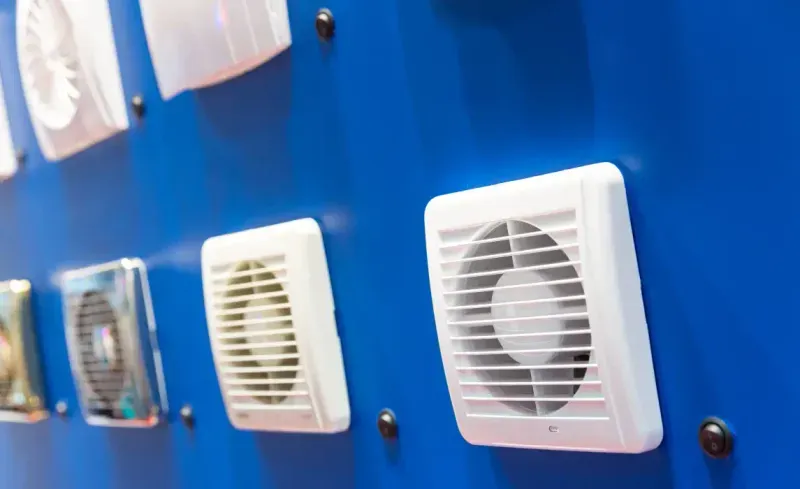
Read Related Article: Why Your Kitchen Exhaust Fan Matters More Than You Think When You're Hosting
Discover why a kitchen exhaust fan is essential when hosting. Learn how it improves air quality, removes odors, and keeps guests comfortable.
Read More
Have backup fuel on hand.
Running out of pellets or charcoal mid-cook is a bigger problem with an 8-hour smoke than with a 20-minute grill session, keep an extra bag on hand rather than assuming what's in the hopper is enough.
Think about smoke drift.
If guests are seated close by, position the smoker so the exhaust vents away from the seating area, not toward it.
Keep the quick-grill items separate from the long smoke.
Burgers, chicken thighs, and veggies for guests who want food sooner can go straight on the direct-heat side while the main event keeps smoking, this is where a combo or offset unit actually pays off over a single-zone grill.
FAQs
Can one grill really smoke and sear well, or is that mostly a marketing claim?
It depends on the unit. Pellet grills handle both reasonably well since they control temperature automatically across a wide range; offset charcoal setups do it by giving you two separate cooking zones instead of one compromise zone.
How much smoked meat can a typical combo grill handle for a party of 15–20?
A grill with roughly 800+ sq. in. of cooking space (like the Royal Gourmet or Traeger Pro 34) can generally handle a full brisket or 2–3 racks of ribs plus room for sides, which comfortably covers that group size.
Do these need constant attention, or can I actually host while one is running?
Pellet grills are the closest to "set it and check periodically." Charcoal and offset setups need more regular hands-on attention to manage airflow and fuel throughout the cook.
Disclosure: This article is intended for informational and review purposes only. Product details are based on manufacturer listings and publicly available information at the time of writing rather than hands-on testing, so specs, inclusions, and configurations can change, confirm current details on the product page before buying. This post also contains affiliate links; if you purchase through them, we may earn a small commission at no extra cost to you. This doesn't affect which products we chose to feature



.webp)

