Read Related Article: Kitchen Range Guide: Choose the Best Stove Type
Compare gas, electric, and induction ranges to find the best stove type for your kitchen, cooking style, budget, and entertaining needs.
Read More

Use high heat, cook ingredients in batches to avoid overcrowding, and keep ingredients moving in the pan for even cooking.
Cook sliced onions slowly over low heat with a bit of oil or butter, stirring occasionally, until deeply browned and sweet.
Use a meat thermometer to check internal temperatures: 145°F for pork, 160°F for ground meats, and 165°F for poultry.
You've planned the menu. You've picked the playlist. Maybe you've even color-coordinated the napkins. And then halfway through plating the appetizers, you notice it, that haze hanging over the stove, the smell of garlic and seared fish starting to fight each other in the air, and a faint film already forming on your countertop.
Nobody plans a party around their exhaust fan. But it's quietly doing more work than almost anything else in the room.
Cooking for one or two people produces a manageable amount of smoke and steam. Cooking for a dinner party doesn't, you've got appetizers on the stove, something roasting in the oven, maybe a pan finishing on the side, all running at once for hours instead of twenty minutes. That's a lot more warm, moisture-heavy air being generated in a much shorter window than your fan is used to handling.
Here's the part most people don't realize: that warm air doesn't just disappear when the smell fades. It carries odor molecules that settle into curtains, upholstery, and even your guests' jackets if they're hanging near the kitchen. Without somewhere for that air to go, it just keeps recirculating through the room, which is why a home can still smell like dinner the next morning, long after the dishes are done.
If your kitchen is part of an open floor plan, which is the case in most homes now, there's no real boundary between "kitchen air" and "party air." Whatever your stove puts out becomes part of the room your guests are standing in, almost immediately.
Compare gas, electric, and induction ranges to find the best stove type for your kitchen, cooking style, budget, and entertaining needs.
Read MoreBefore any of the hosting-day tips below will make sense, it helps to know what you're actually working with, because not every type handles a multi-hour cooking session the same way.
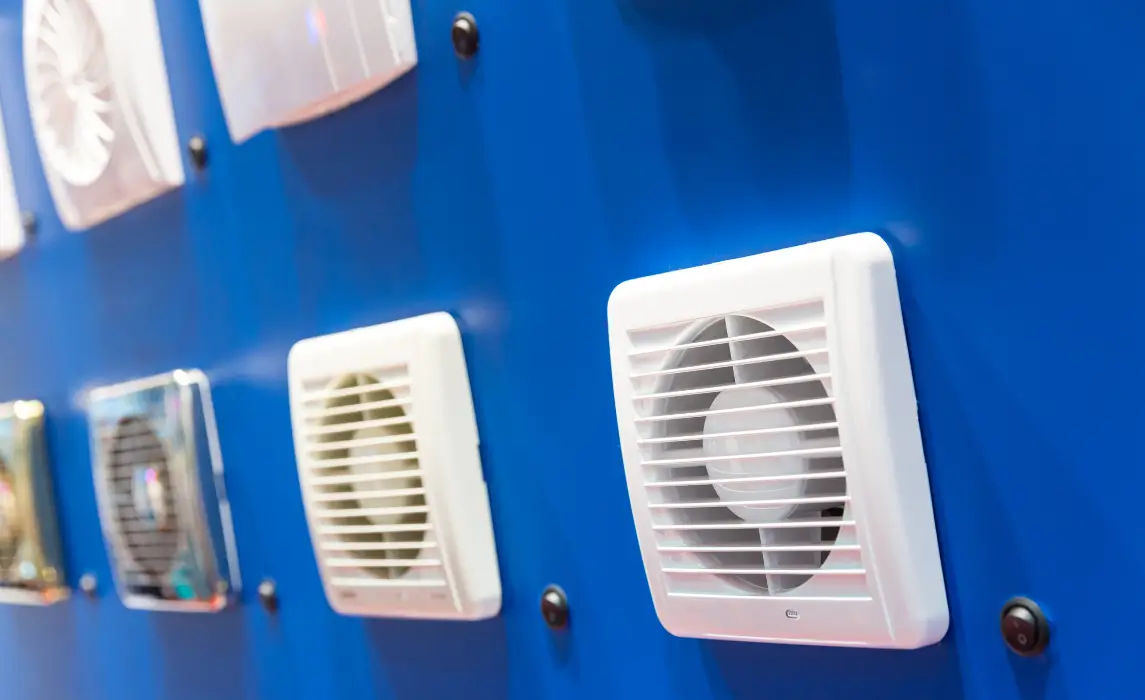
Mounted directly into an exterior wall, these pull air straight outside. They're common in smaller kitchens or older homes, and they move a real volume of air, but typically without built-in grease filtration, useful for general airflow and heat relief, less suited as your only defense against heavy frying or searing.
These sit in an open window and pull air directly outside with zero installation. They're one of the most useful backup tools on hosting day, since you can position one specifically to draw smoke and steam away from where your guests are seated rather than across the room.
These are mounted remotely, inside ductwork, in an attic, or behind a wall, rather than sitting right above the stove. They move air outside the home, often more quietly than a fan mounted in the kitchen itself, since the motor noise happens farther away from where people are standing and talking.
Self-contained units that need no installation at all, making them popular for renters or smaller kitchens. They're built for light, everyday ventilation rather than sustained heavy-duty cooking, fine for one or two dishes, but not something to rely on alone if you're hosting a crowd.
The practical takeaway: units that vent air outside (wall-mounted, window, inline) clear smoke and odor far more completely than anything that just recirculates air through a filter. The type you have determines how hard you need to lean on backup tactics, cracked windows, repositioning a portable fan, running things longer, covered later in this article.
Discover the best portable dishwashers for entertaining, with top picks that simplify party cleanup, save time, and keep your kitchen running smoothly.
Read MoreA standard buying guide will tell you to think about CFM and noise levels. Those still matter, but here's what's specific to hosting that most ventilation advice skips entirely:
You can spend hours making a table look beautiful, but if the air smells like last night's fish, that's the first impression. Scent memory is also stronger and faster than visual memory, so a lingering odor colors how people remember the whole evening, even subconsciously.
A fifteen-minute weeknight stir-fry and four hours of continuous hosting-day cooking are not the same load on your kitchen's air. The smell you barely notice at 5 PM can be overwhelming by 9 PM if it's never being pulled out, only added to.
It's not just "more cooking odor", it's garlic, chocolate, seafood, and red wine all occupying the same air at the same time. A working exhaust fan doesn't just reduce intensity; it keeps those smells from blending into something muddier and less pleasant than any one of them alone.
Professional kitchens are designed so air moves from the dining space toward the kitchen and out, never the reverse, since that would push smoke and grease toward guests instead of away from them. You can borrow this principle at home: position fans and cracked windows so air is pulled away from your seating area, not blown across it.
If you're hosting anything you're planning to capture, a holiday gathering, a birthday, content for a brand or your own page, a light smoke haze is genuinely visible in photos and video, especially under warm indoor lighting. Good ventilation is invisible the way good lighting is invisible: you only notice it when it's missing.
This part rarely makes it into hosting advice, but it's worth knowing: the smoke you can see is only a fraction of what's actually in the air. Cooking, especially searing, frying, or anything on a gas stove, releases fine particles and gases that stay suspended long after the visible smoke clears, and they settle on surfaces and get breathed in by everyone in the room, not just whoever's standing at the stove.
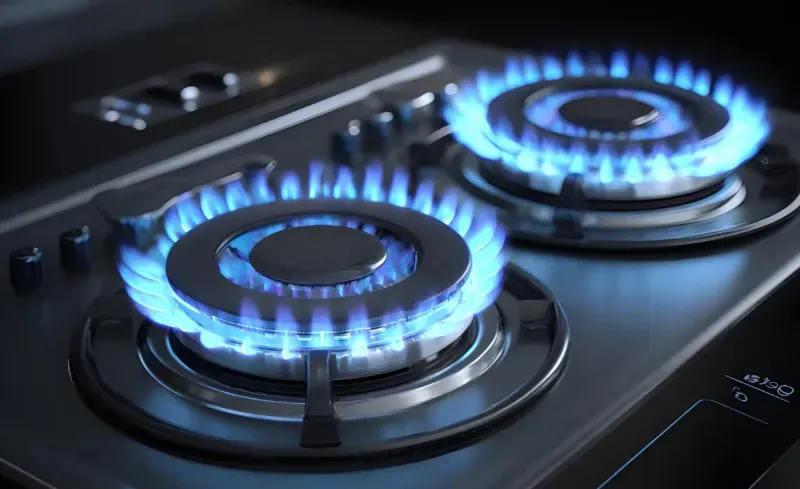
If you're cooking with gas, there's an added layer: gas stoves can produce nitrogen dioxide and, in some cases, small amounts of carbon monoxide. The amounts from normal cooking are low, but a packed kitchen with multiple burners running for hours is a very different scenario than a quick weeknight meal, and good ventilation is doing real work, not just freshening the air.
There's also a practical safety reason hosting-day cooking deserves more attention than usual: grease buildup is one of the more common causes of kitchen fires, and an exhaust fan that's actually pulling air (not just clogged or underpowered) is part of what keeps that grease from accumulating on surfaces during a long cooking session.
.webp)
Learn how to host the ultimate fondue party with delicious dipping ideas, simple planning tips, and creative touches your guests will remember long after the gathering ends.
Read MoreThis is the part most articles skip, the practical, same-day checklist that makes a real difference:
Ventilation works by preventing buildup, not by clearing it after the fact. Running it five minutes before your first pan hits the heat means you're never playing catch-up.
That burst of hot, moist air needs somewhere to go immediately, or it spreads into the room and settles into soft furnishings. A few seconds of open window gives it a direct exit instead.
You don't need maximum airflow once people are seated and eating, just enough to keep things moving. This also solves the "fan is too loud for conversation" problem without sacrificing performance when it counts.
Direction matters as much as power, a fan blowing toward your guests just moves the smell to where they're sitting instead of removing it.
If you're deep frying, searing, or doing anything with a lot of oil, run two ventilation points if you can, your main exhaust fan plus a portable or window fan as backup. High-oil cooking produces more airborne grease than a single fan is usually sized to handle.
Most lingering odor comes from residual moisture and particles still suspended in the air, not from active cooking, a few extra minutes of runtime clears far more than people expect.
If you find yourself entertaining regularly, not just on holidays, but as a habit, it's worth treating your exhaust fan as part of your hosting setup, not just a kitchen fixture you inherited with the house. A higher-CFM fan with multiple speed settings earns its cost back the first time you host a crowd without your home smelling like the party for two days afterward. Look for adjustable speed control specifically, since the ability to go from "max power while searing" to "quiet background hum once guests sit down" is the single most useful feature for hosting, more than raw power alone.
Both. Running it through the meal, even on a low setting, keeps odor and excess heat from building up in a room full of people for hours, not just during active cooking.
Run the exhaust fan during and right after cooking, crack a window briefly when the oven door opens, and avoid masking the smell with candles or sprays, those add their own compounds to the air rather than removing anything.
Yes, for at least ten to fifteen minutes. Most of the lingering odor comes from residual moisture and grease particles still suspended in the air, not from active cooking, so a few extra minutes of runtime clears far more than people expect.
For light cooking, yes. For multi-dish hosting with hours of stovetop and oven use, it works best paired with a second fan positioned as backup, or as a temporary fix if angled to pull air toward a window or door rather than across the room.
.webp)

.webp)