Read Related Article: Ice Cream Party Ideas: Birthday & More
Discover fun ice cream party ideas for birthdays, summer gatherings, and celebrations. Get themes, decorations, toppings, games, and dessert inspiration.
Read More


Use high heat, cook ingredients in batches to avoid overcrowding, and keep ingredients moving in the pan for even cooking.
Cook sliced onions slowly over low heat with a bit of oil or butter, stirring occasionally, until deeply browned and sweet.
Use a meat thermometer to check internal temperatures: 145°F for pork, 160°F for ground meats, and 165°F for poultry.
Hosting a party doesn't have to mean standing over a grill while everyone else has fun. A burger bar flips the script: you cook the patties, set out the toppings, and let guests build their own plate exactly how they like it. No taking orders, no "who wanted no onions again?", no cold burgers because you were still assembling the fifth one.
This setup works because it solves the two biggest problems of backyard entertaining, feeding a crowd with different tastes, and keeping the host out of the kitchen once the food's ready. Below, you'll find everything you need to pull one off: station layout, patty and bun options, topping combinations that go beyond ketchup and mustard, themed variations, sides, and prep timing so nothing goes soggy or warm before guests arrive.
A burger bar is a build-your-own burger station, patties, buns, and toppings laid out separately so each guest assembles their own burger instead of you making it to order. It works for almost any casual gathering: graduation parties, Fourth of July cookouts, birthdays, tailgates, or just a Saturday when you want people over without spending the whole afternoon cooking.
The format scales easily too. For 8 people, one folding table handles everything. For 30+, you're looking at two stations to avoid a bottleneck, a good rule of thumb is one station per 15-20 guests, since that's roughly how many people can move through a single line in the first 20 minutes of serving without a backup forming.
It also solves the dietary-preference problem before it becomes an issue. Instead of asking every guest ahead of time what they can or can't eat, a burger bar with 2-3 patty options and clearly labeled toppings lets people self-select, someone avoiding gluten grabs the lettuce wrap without you having to remember who's who.

Discover fun ice cream party ideas for birthdays, summer gatherings, and celebrations. Get themes, decorations, toppings, games, and dessert inspiration.
Read MoreThe single biggest mistake with burger bars isn't the food, it's the layout. Put the buns before the toppings, or leave no gap between the sauce station and the patties, and you get a traffic jam of people balancing plates.
Order the line like this:
Use a chafing dish or slow cooker on low for patties, a second one for warm toppings like bacon or sautéed mushrooms, and ice-lined trays for anything mayo-based or dairy that shouldn't sit out past two hours. This isn't just about taste, mayo-based sauces and cheese left in the sun for more than two hours (or one hour above 90°F) are a real food safety issue, not just a texture one.
A small chalkboard or printed card labeling each topping means fewer "what's this one?" questions and keeps the line moving, especially useful if you've got a themed sauce like chipotle aioli that isn't self-explanatory. Cards are also the easiest way to flag allergens, a small "contains nuts" or "dairy-free" note next to a sauce saves you from being asked one-on-one all afternoon.
A 6-foot folding table comfortably fits the full topping line for up to about 20 guests. Past that, either add a second identical table running parallel (so two lines form and cut wait time in half) or split hot items and cold toppings onto two separate tables a few feet apart, which also solves the food-safety spacing issue mentioned above.
Tongs for every topping that isn't scoopable (nobody wants to touch someone else's tongs for pickles right after bacon), small bowls or trays with lips so sauces don't run into each other, and a trash/recycling bin at the end of the line so plates don't pile up back at the table.

Plan the perfect Labor Day BBQ at home with easy menu ideas, grilling tips, decorations, games, and hosting advice for a fun, stress-free celebration.
Read MoreStick to 2-3 patty options max, more than that and prep gets complicated fast, and most parties don't need five kinds of meat.
If your group leans toward "just a taste of everything," go with sliders (2-3 oz patties) instead of full 6 oz patties. People are more likely to try a Hawaiian-style slider and a Tex-Mex one if each is bite-sized, rather than committing to one full burger.
Doneness and timting beef patties need an internal temp of 160°F to be safe, while turkey and chicken need 165°F, a quick meat thermometer check on a few patties per batch is faster and more reliable than cutting one open. On a standard gas grill, expect about 4-5 minutes per side for a 6 oz beef patty over medium-high heat, and closer to 6-7 minutes per side for turkey or chicken since they're leaner and cook slower.
A Note on Veggie and Portobello patties they don't need nearly as long on the grill (2-3 minutes per side is usually enough, mostly just to warm through and mark), so put them on last if you're cooking everything on one grill, that way they're not sitting under a heat lamp getting rubbery while the beef finishes.
Offer at least one alternative to a standard bun, it costs little and solves a real problem for a chunk of your guests.
A small but easy upgrade: toast the cut side of every bun on the grill for 30-60 seconds before serving. It takes almost no extra time, keeps the bun from turning soggy once the juicy toppings hit it, and gives a noticeably better texture than a straight-from-the-bag bun. If you're toasting a large batch, do it in the last few minutes while the final patties finish cooking so buns don't cool down and go chewy before people get to them.
Grouping toppings by category, rather than scattering everything in one long row, actually speeds up the line because people know where to look.
Cheeses: cheddar, pepper jack, blue cheese crumbles, American (still the best melter if you want that classic diner texture)
Fresh & crisp: lettuce, tomato, raw or grilled onion, pickles, grilled onion in particular is underused and adds a sweetness raw onion doesn't
Elevated toppings: caramelized onions, sautéed mushrooms, a fried egg, bacon, avocado or guacamole, these are the toppings that make a burger bar feel like more than a backyard cookout, and they're worth the extra ten minutes of prep
Sauce station: ketchup, mustard, mayo as the baseline, plus one or two specialty sauces, chipotle mayo, garlic aioli, a tangy BBQ, or a "special sauce" (mayo, ketchup, relish, a dash of paprika) that people will ask you for the recipe of
Rough quantities for 20 guests (adjust up for a heavier-eating crowd): 2 lbs shredded cheese total across your chosen types, 2 heads of lettuce, 4-5 tomatoes, 2-3 onions, a 16 oz jar of pickles, and about 1 cup each of your 2-3 sauces. Bacon and avocado run out fastest of any topping, so double what feels like "enough" if you're including them, they tend to get piled on rather than used in moderation.
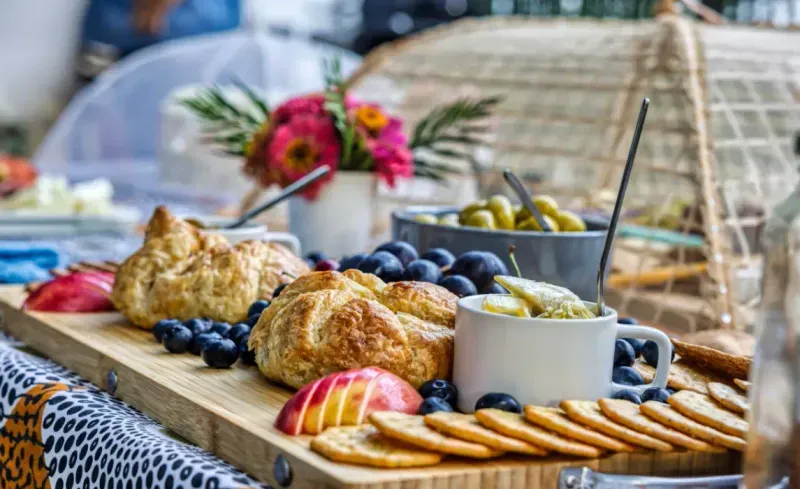
Learn how to build a stunning grazing board with the perfect mix of meats, cheeses, fruits, and snacks. Get easy tips for creating an impressive spread for any occasion.
Read MoreIf you want variety without doubling your workload, pick one theme and build the toppings around it rather than trying to offer every option above at once.
For a mixed-age crowd or a party where you can't commit to just one theme, running two smaller themed stations (say, Tex-Mex and Hawaiian) works better than one giant table with every topping from every theme mixed together, it keeps flavor combos coherent instead of turning into a "one of everything" burger that doesn't quite work. It also photographs better for Pinterest or social posts, since each themed station has its own distinct color palette and setup rather than one crowded spread.
Fries specifically hold up better as a side than potato chips if you're keeping food out for more than an hour, since chips go stale fast in humid or outdoor conditions. If you're feeding a big group, oven-baked fries in batches on a schedule (one tray every 20 minutes) keep a steady hot supply coming out rather than one giant tray going lukewarm by the time half the guests arrive.
Eight to ten toppings is the sweet spot, enough for real variety without guests standing in front of the table deciding for five minutes. Group them by category (cheese, fresh, elevated, sauce) so the choice feels manageable.
Use a chafing dish or slow cooker set to low for patties and warm toppings, and avoid setting food directly in direct sun. If it's a hot day, swap out cold toppings every hour rather than letting them sit the full afternoon.
Cheddar, raw onion, lettuce, tomato, pickles, and a homemade special sauce cover most people's preferences without needing pricier add-ons like avocado or bacon. Add one "splurge" topping like bacon rather than several to keep costs down.
Plan for 1.5 patties per adult, most people build one burger, then go back for a second smaller one to try a different topping combo. For sliders, plan on 2-3 per person instead.
.webp)
.webp)
.webp)