Quick answer: National Best Friends Day falls on June 8 every year, June 8, 2026 lands on a Monday. It's a U.S.-born, now widely celebrated occasion for honoring one specific person: your closest, longest-running, most trusted friend. It's not the same holiday as National Friendship Day (first Sunday of August) or International Friendship Day (July 30), more on that mix-up below, because it trips up a lot of people every summer.
When Is It, and Why Does Everyone Confuse It With the Other Friendship Holidays?
June 8 is the date to remember. But here's something most articles about this day get wrong or skip entirely: there isn't just one "friendship day" on the calendar, and the confusion is doing your search results a disservice.
There are three separate observances, each with a different origin:
- National Best Friends Day, June 8. Focused on a single, specific best friend rather than friendship in general.
- National Friendship Day (U.S.), first Sunday of August, landing on August 2 in 2026. This one traces back to Hallmark founder Joyce Hall, who pitched the idea in 1930 as a card-buying occasion, later picked up in a 1935 congressional resolution.
- International Friendship Day, July 30, fixed every year. This came from a 2011 United Nations resolution and has nothing to do with the Hallmark-linked U.S. holiday.
Some sources claim Congress designated June 8 specifically back in 1935, you'll see that claim repeated across a lot of holiday-calendar sites. But the 1935 congressional record actually points to the August observance, not June. National Best Friends Day's real origin is murkier and much more recent: one commonly cited account traces it to 2002, when a group of friends in Richmond, Virginia threw a water park party they branded "Best Friends Day," and the idea spread online from there rather than through any government proclamation. It's an unofficial holiday, no federal recognition, no bank closures, which is honestly part of its appeal. Nobody's cashing in a paid day off for it; people mark it because they want to, not because a calendar told them to.
Knowing this distinction matters if you're ever unsure which day to message which friend, or if you've seen conflicting dates online and wondered which one is "real." Short version: they're all real, they just honor slightly different things.
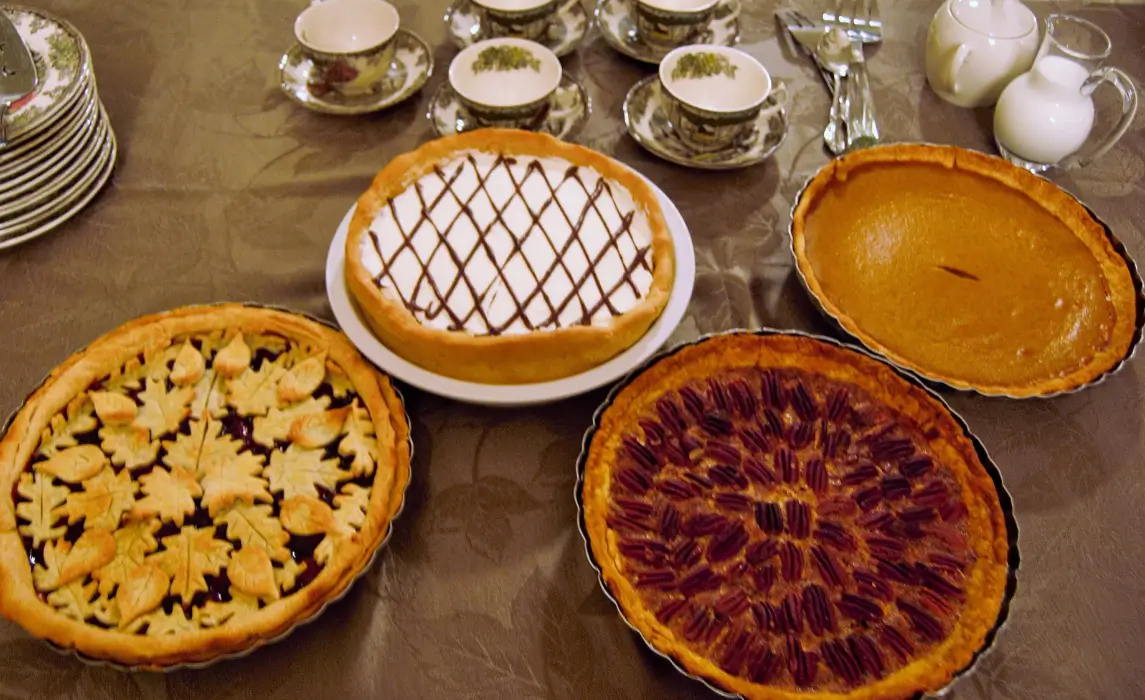
Read Related Article: 15 Easy Thanksgiving Desserts That Don't Require a Culinary Degree
Make Thanksgiving easy with 15 simple dessert recipes anyone can bake. From pies to no-bake treats, these crowd-pleasing ideas require minimal time and skill.
Read More
Why This Particular Friendship Gets Its Own Day
Family relationships come loaded with history and obligation. Coworkers come with hierarchy. A best friend is different, it's the one close relationship you chose freely and kept on purpose, with no contract holding it together besides mutual effort. That voluntary quality is exactly why these friendships tend to hold the most unfiltered version of you: the version that doesn't perform, doesn't manage the relationship, and doesn't worry about being too much.
There's also a research angle worth knowing, because it reframes the holiday as more than a greeting-card gimmick:
- A 2018 Pew Research survey found 98% of teens report having at least one close friend, and 78% say they have between one and five.
- Chronic loneliness has been studied as a health risk on par with smoking roughly 15 cigarettes a day.
- People with strong close friendships consistently show better cardiovascular health, stronger immune function, and faster recovery after illness or trauma in longitudinal studies.
That's the part most "how to celebrate" listicles skip. Best Friends Day isn't just sentimental, it's a low-effort, once-a-year nudge toward a habit (staying in real contact with the people closest to you) that has measurable effects on how long and how well you live.
How People Actually Celebrate It
Forget generic "send a card" advice. Here's what actually lands, organized by what your friendship looks like right now:
If you see each other often
Skip the planned outing and just extend an ordinary hangout, dinner, a walk, whatever you'd already do, and use the day as a reason to actually say the appreciation out loud instead of assuming it's understood. Most close friends never verbally acknowledge how much they value each other; the relationship runs on implication. This is the one day that gives you permission to break that pattern without it feeling awkward or out of nowhere.
If you're long-distance
A scheduled video call beats a text. Pull up old photos together on screen, or send a small object tied to an inside joke rather than a generic gift, the specificity is what makes it land. A handwritten letter also works better here than people expect; it takes longer to arrive, which oddly makes it feel more considered.
If the friendship has drifted
This is the use case nobody talks about, but it's arguably the most useful one. If you've lost touch with someone who used to be your closest friend, June 8 is a low-pressure excuse to reach out without it needing to be A Big Conversation. "Saw it's Best Friends Day and thought of you" carries none of the weight of "we should talk about why we stopped talking." It's a door left open, not a demand for closure.
If you want to mark it publicly
A shared photo works, but consider pairing it with something the algorithm can't replicate, a specific memory in the caption, not just "love you, bestie." Vague captions get likes; specific ones get replies.
Read Related Article: Friendsgiving Party Ideas at Home
Plan a memorable Friendsgiving at home with fun party ideas, easy food, festive decorations, games, and activities your friends will love.
Read More
The One Thing Worth Remembering
The gesture matters far less than the specificity. A three-word "thinking of you" lands softer than an expensive gift with no note attached, because it proves you were actually paying attention rather than fulfilling an obligation. Best Friends Day works best as a prompt, not a performance, a once-a-year checkpoint to make sure the person who knows the most about you also knows, clearly and recently, that it's mutual.
Frequently Asked Questions
Is National Best Friends Day an official U.S. holiday?
No. It's an unofficial observance, there's no federal recognition and no paid day off tied to it.
Is National Best Friends Day the same as National Friendship Day?
No. National Best Friends Day is June 8 and centers on one specific close friend. National Friendship Day is a separate U.S. observance on the first Sunday of August (August 2 in 2026) and centers on friendship more broadly.
What's the difference between National Friendship Day and International Friendship Day?
National Friendship Day is a U.S. observance from a 1930s Hallmark-linked tradition, held the first Sunday of August. International Friendship Day is a fixed July 30 date created by a 2011 UN resolution and observed globally.
Where did National Best Friends Day come from?
Its exact origin is unofficial and disputed. The most commonly cited story traces it to 2002, when a friend group in Richmond, Virginia held a water park party under that name and the concept spread through word of mouth and later social media, rather than through any government declaration.



.webp)
.webp)
.webp)