Hosting a holiday means feeding people who expect certain dishes, usually in a kitchen built for far fewer of them. This guide covers the classic American menu for each major holiday, how much to cook, when to start, and how to serve dishes rooted in African American, Native American, and immigrant traditions with the respect they deserve.
Quick Answer: What to Serve at Each Holiday Gathering
Match the menu to the season. Cold-weather holidays call for roasts and make-ahead bakes that keep the stovetop free. Warm-weather holidays call for a grill, a cooler, and sides that are served cold.
- New Year's Day: Hoppin' John, collard greens, cornbread. Soak the peas overnight to shorten cooking time.
- Super Bowl Sunday: chicken wings, chili, nachos, dips. Chili and dips improve when made a day ahead, and baked wings avoid a kitchen full of hot oil.
- Easter: glazed ham, deviled eggs, spring vegetables. Most hams are sold fully cooked and only need reheating, so the oven stays available for sides.
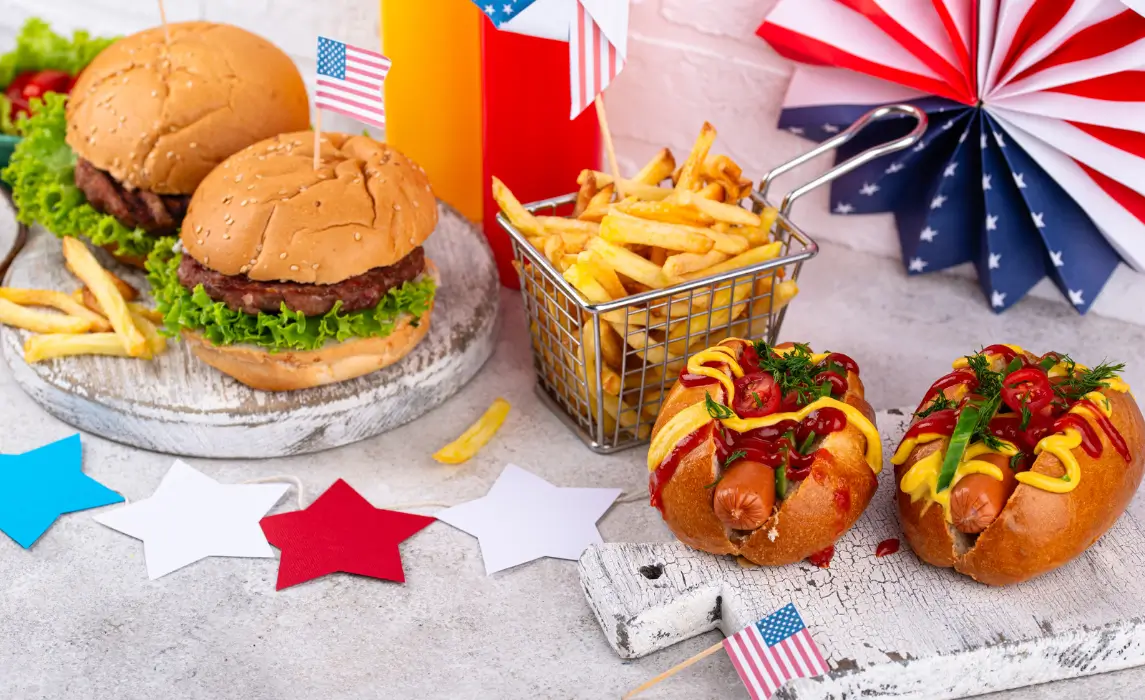
- Memorial Day and Fourth of July: burgers, hot dogs, ribs, corn on the cob, watermelon. Keep cold dishes on ice and out of the sun.
- Juneteenth: barbecue, red velvet cake, strawberry soda, hibiscus tea. A relaxed cookout is the natural format.
- Thanksgiving: roast turkey, stuffing, cranberry sauce, mashed potatoes, pumpkin pie. Order the bird and clear refrigerator space days ahead.
- Christmas and Hanukkah: roasts, ham, latkes, sweet potato casserole, cookies. Cookies and many sides freeze well, which spreads the work across weeks.
Read Related Article: Best Norwegian Souvenirs: What to Buy in Norway
Discover the best Norwegian souvenirs to bring home from Norway, from traditional wool sweaters and handcrafted items to local treats, Viking-inspired gifts, and unique keepsakes.
Read More
The Holiday Hosting Calendar
Use this as a planning checklist for the year. Dates for "National Food Day" observances, like National Pizza Day, are mostly invented by brands and trade groups, so they work for a theme night but not for a traditional menu.
| Holiday |
When |
Classic Menu |
Best Hosting Format |
Start Planning |
| New Year's Day |
January 1 |
Hoppin' John, greens, cornbread |
Brunch or open house |
1 day ahead |
| Super Bowl Sunday |
Early February |
Wings, chili, dips |
Grazing buffet |
2 days ahead |
| Mardi Gras |
Day before Ash Wednesday |
King cake, gumbo, jambalaya |
One-pot dinner party |
2 to 3 days ahead |
| St. Patrick's Day |
March 17 |
Corned beef, cabbage, soda bread |
Sit-down dinner |
1 week ahead (order the beef) |
| Easter |
Spring (date varies) |
Ham, deviled eggs, lamb |
Brunch or early dinner |
1 to 2 weeks ahead |
| Memorial Day |
Last Monday of May |
Burgers, hot dogs, potato salad |
Backyard cookout |
2 days ahead |
| Juneteenth |
June 19 |
Barbecue, red foods, peach cobbler |
Cookout or community gathering |
3 days ahead |
| Fourth of July |
July 4 |
Hot dogs, ribs, corn, apple pie |
Cookout |
3 days ahead |
| Labor Day |
First Monday of September |
Burgers, grilled vegetables, ice cream |
Last-of-summer cookout |
2 days ahead |
| Halloween |
October 31 |
Chili, caramel apples, candy |
Casual party |
2 days ahead |
| Thanksgiving |
Fourth Thursday of November |
Turkey, stuffing, pies |
Sit-down dinner |
2 weeks ahead |
| Hanukkah |
Late November to late December (varies) |
Latkes, brisket, sufganiyot |
Eight nights, fry latkes to order |
1 week ahead |
| Christmas |
December 25 |
Roasts, ham, cookies, eggnog |
Sit-down dinner or open house |
2 to 3 weeks ahead |
| Kwanzaa |
December 26 to January 1 |
Karamu feast on the sixth night |
Community potluck |
1 week ahead |
Hosting Thanksgiving: The Biggest Meal of the Year
Thanksgiving is the one holiday that is almost entirely about the meal. The National Turkey Federation has estimated that roughly 46 million turkeys are eaten on the day, so the bird is the center of the plan, and the way to a calm kitchen is to schedule everything around it.
The turkey math. Buy about 1 pound of whole turkey per guest, or 1.5 pounds if leftovers are part of the plan. A frozen bird thaws in the refrigerator at roughly 24 hours for every 4 to 5 pounds, so a 16-pound turkey needs about 3 to 4 days. Cook it until the thickest part of the breast, the innermost thigh, and the wing all read 165°F.
A countdown that works:
- Two weeks out: confirm the guest count and dietary needs, order the turkey, and assign dishes to guests who offer to help.
- Four to five days out: start thawing the turkey and clear refrigerator space.
- Two days out: make the cranberry sauce and pies, and shop for fresh ingredients.
- The day before: prep stuffing components, set the table, and chill drinks.
- The day of: roast the turkey first. It rests for 30 minutes or more once it comes out, and that window is when the oven is free for sides.
Give the menu a regional angle. Instead of the same spread every year, a regional theme makes the meal feel hosted rather than assembled:
- The South: cornbread dressing, macaroni and cheese, collard greens, sweet potato pie
- New England: cranberry sauce, roasted squash, Indian pudding
- The Southwest: green chile stuffing, tamales, calabacitas
- Louisiana: fried turkey with Cajun seasoning, served alongside gumbo
- The Midwest: wild rice dishes and green bean casserole, which a food company's test kitchen created in 1955
A story worth telling at the table. The 1621 harvest gathering at Plymouth appears in only a couple of short colonial accounts, which mention wildfowl and venison rather than a menu of turkey, mashed potatoes, and pumpkin pie. The modern menu built up over later centuries, helped by Sarah Josepha Hale's 19th-century campaign for a national holiday and Abraham Lincoln's 1863 proclamation.
Hosting African American Holiday Traditions With Care
Much of what Americans call "traditional" holiday food came from Black cooks, so hosting these dishes well means more than getting the recipe right. Name where the food comes from, and follow the people who keep the tradition.
New Year's Day luck foods. Serve Hoppin' John (black-eyed peas and rice) with collard greens and cornbread. By tradition the peas bring luck, the greens stand for paper money, and the cornbread for gold. Black-eyed peas reached the Americas through the African diaspora, and the custom is closely tied to Black Southern communities. Guests tend to enjoy hearing that story as the dish goes around.
Hosting Juneteenth. Juneteenth, June 19, marks the day in 1865 when enslaved people in Galveston, Texas learned they were free. It became a federal holiday in 2021. Red foods and drinks, such as strawberry soda, red velvet cake, watermelon, and hibiscus tea (sorrel in the Caribbean), are widely served, and the red is commonly linked to resilience and to West African ingredients like hibiscus. Interpretations vary, so share it as a tradition with several explanations. Treat the day as a commemoration, not a themed party: open with a few words on what it marks, and buy barbecue, baked goods, or catering from Black-owned businesses where you can.
Soul food at Thanksgiving and Christmas. Baked macaroni and cheese, candied yams, collard greens, cornbread dressing, and sweet potato pie anchor many Black holiday tables, and they reflect both West African techniques and the resourcefulness of cooks working with limited ingredients. If the dishes are new to you, ask a cook from the tradition for a recipe or order from one, and credit them when you serve it.
Kwanzaa. Created in 1966 by Maulana Karenga, Kwanzaa runs from December 26 through January 1. Its communal feast, the Karamu, is held on the sixth night, December 31, and menus often draw on African, Caribbean, and Southern dishes such as jollof rice, gumbo, and fried plantains. A potluck suits the spirit of the holiday.
Read Related Article: Best Norwegian Souvenirs: What to Buy in Norway
Discover the best Norwegian souvenirs to buy in Norway, from traditional wool sweaters and handcrafted gifts to local delicacies, Viking-inspired keepsakes, and authentic Norwegian treasures.
Read More
Putting Native American Foods on Your Menu
Turkey, corn, squash, beans, potatoes, cranberries, pumpkin, and maple syrup are all native to the Americas, so a typical holiday table is already built on Indigenous ingredients. Hosting can make that visible instead of leaving it unspoken.
- The Three Sisters: corn, beans, and squash, grown together by many Indigenous nations. The corn supports the beans, the beans enrich the soil, and the squash shades out weeds. Succotash or a roasted squash, corn, and bean side puts the idea on the plate.
- Wild rice: a staple of the Great Lakes region, called manoomin by the Ojibwe. It works well in stuffing and pilafs.
- Cranberries and maple: both used long before European settlement, and both useful as glazes for turkey, ham, or roasted vegetables.
- Fry bread: a food with a complicated history, born from government rations and now a symbol of both hardship and endurance. Serve it with context rather than as a novelty.
One practical step: add a single Indigenous-sourced dish, and buy wild rice, maple, or blue corn from Native-owned producers where possible.
Hosting a Summer Cookout: Memorial Day, Juneteenth, and the Fourth of July
Summer hosting runs on the grill and on timing. The National Hot Dog and Sausage Council estimates Americans eat about 150 million hot dogs on the Fourth of July alone, so guests arrive expecting a full spread, and the main job is keeping it safe and moving.
Portions that hold up:
- Burgers and hot dogs: plan on 1 to 2 per guest, with about one-third pound of ground beef per burger.
- Ribs: about three-quarters of a pound to 1 pound of bone-in ribs per guest if they are the main dish.
- Sides: three to four cold sides, such as potato salad, coleslaw, corn, and watermelon, cover most groups.
Food safety outdoors. Keep cold food at 40°F or below and hot food at 140°F or above. Perishables should not sit out more than 2 hours, or 1 hour when the temperature is above 90°F. Cook burgers to 160°F and chicken to 165°F. Using two coolers, one for drinks that get opened constantly and one for food that stays shut, keeps the food cold longer.
Regional touches that make it feel hosted. Carolina and Texas barbecue styles have loyal fans, Maine serves lobster rolls, the Chesapeake region steams crabs, and a Chicago-style hot dog famously skips the ketchup.
Hosting in Winter: Christmas, Hanukkah, and Mixed-Tradition Tables
December tables reflect America's immigrant history, and guest lists are often mixed, so the best approach is to let each tradition have a moment instead of blending them into one generic menu.
- Italian American Christmas Eve: the Feast of the Seven Fishes is a long, grazing meal, so serve it in courses and keep the fish simple.
- Mexican American Christmas: tamales are usually made at a tamalada, a day-long assembly line that doubles as a party. Hosting one means guests arrive to work and leave with a dozen.
- Hanukkah: potato latkes and jelly doughnuts are fried in oil, a nod to the miracle of the oil in the holiday story. Fry latkes in batches and hold them on a rack in a 200°F oven so they stay crisp.
- Cookie swaps: a low-effort format that suits Pennsylvania Dutch, Scandinavian, German, and Polish baking traditions alike. Ask each guest to bring a dozen of a family recipe and a card telling its story.
How Much to Make, and How Much Guests Actually Eat
These are rule-of-thumb amounts for a typical mixed crowd. Add 20 to 25 percent if guests are hungry teenagers or if you want leftovers to send home.
| Item |
Per Guest |
| Appetizers before a meal |
4 to 6 pieces |
| Bone-in ham |
About 1/2 pound |
| Boneless ham |
About 1/3 pound |
| Side dishes |
1/2 cup each, across 4 to 5 sides |
| Pie |
1 pie per 6 to 8 guests, in 2 or more flavors |
| Drinks |
About 1 per hour for the first 2 hours, then fewer |
Expect guests to eat more than usual. A figure often quoted by the Calorie Control Council, an industry group, puts a Thanksgiving dinner near 3,000 calories and a full day of snacking and drinks near 4,500, so treat it as a rough benchmark rather than a measured national average. The National Chicken Council has estimated that Americans eat well over a billion chicken wings around the Super Bowl. Studies on holiday weight change generally find modest gains, often around one pound, but the weight tends to stick around afterward.
Ways to host that help guests enjoy the food without overdoing it:
- Keep appetizers light, with vegetables and a dip, so guests do not fill up before the main meal.
- Use slightly smaller plates and put vegetable dishes first in the serving line.
- Offer water and a non-alcoholic option as visibly as the wine.
- Send leftovers home in containers, which cuts food waste and the temptation to keep eating.
Read Related Article: Best Supermarkets and Grocery Stores in Ireland
Discover the best supermarkets and grocery stores in Ireland, from budget-friendly chains to local favorites, with tips on where to shop for everyday essentials and fresh produce.
Read More
When Cooking Everything Is Not Realistic: Restaurants, Takeout, and Hybrids
Many hosts split the work. A common middle path is to order the centerpiece and cook the sides, which keeps the meal personal without the roasting pressure.
- Pre-cooked holiday meals: grocery stores and many restaurants sell full meals sized for a set number of guests. Most must be ordered a week or more ahead.
- Restaurant dinners: Thanksgiving, Christmas Eve, Easter brunch, and Mother's Day are among the hardest days to book, and many restaurants take reservations weeks in advance.
- Prix fixe menus: many restaurants serve a set holiday menu at a fixed price, often without substitutions, so confirm dietary needs when booking.
- Hours vary by location: chains such as Cracker Barrel and Denny's have traditionally served on Thanksgiving, and many Chinese restaurants have long been open on Christmas Day. Call to confirm before planning around them.
Hosting Without the Stress: Details That Make the Day Work
- Ask about dietary needs early. Vegetarian, gluten-free, and allergy requests are common, so ask when invitations go out and label dishes on the table.
- Let guests contribute. Assigning a dish makes the day easier and brings family recipes to the table. Give the guest who offers dessert a specific dish rather than "whatever you like" to avoid five pies.
- Plan for kids. A small table with simple food, such as plain pasta or sliders, keeps adults free to talk.
- Set up self-serve drinks. A drink station near the door keeps the host out of the bartending role.
- Store leftovers promptly. Refrigerate within two hours and plan to eat them within three to four days, or freeze them.
Frequently Asked Questions About Hosting Holiday Meals
What is the most popular American holiday food to serve?
Turkey is the best known, especially at Thanksgiving. By volume, hot dogs on the Fourth of July and chicken wings around the Super Bowl are among the most-eaten holiday foods.
How do I plan a holiday meal for a large group?
Start about two weeks ahead: confirm the guest count and dietary needs, order the main dish, and assign dishes to guests. Choose a few sides that can be made ahead so the oven is not overloaded on the day.
How much turkey do I need per person?
Buy about 1 pound per guest, or 1.5 pounds if you want leftovers.
What do African American families traditionally serve on holidays?
Common dishes include black-eyed peas and greens on New Year's Day, red foods and barbecue on Juneteenth, and macaroni and cheese, cornbread dressing, candied yams, and sweet potato pie at Thanksgiving and Christmas.
Why are red foods served on Juneteenth?
Red is associated with resilience and with West African ingredients like hibiscus. Explanations differ, and the tradition has grown over generations.
Which Native American foods can I serve at Thanksgiving?
The Three Sisters (corn, beans, squash), wild rice, cranberries, pumpkin, and maple syrup are all foods cultivated or gathered by Indigenous peoples. Buying from Native-owned producers is a good way to include them.
Are "National Food Days" official holidays?
No. Most are created by food companies, trade associations, or social media campaigns. Federal holidays are set by Congress.
How do I keep food safe at an outdoor cookout?
Keep cold food at 40°F or below and hot food at 140°F or above, and do not leave perishables out more than 2 hours (1 hour above 90°F).
What if I do not want to cook everything myself?
Order the main dish pre-cooked and make the sides, ask guests to bring dishes, or book a restaurant. Reservations and pre-orders for major holidays usually need to be made weeks ahead.