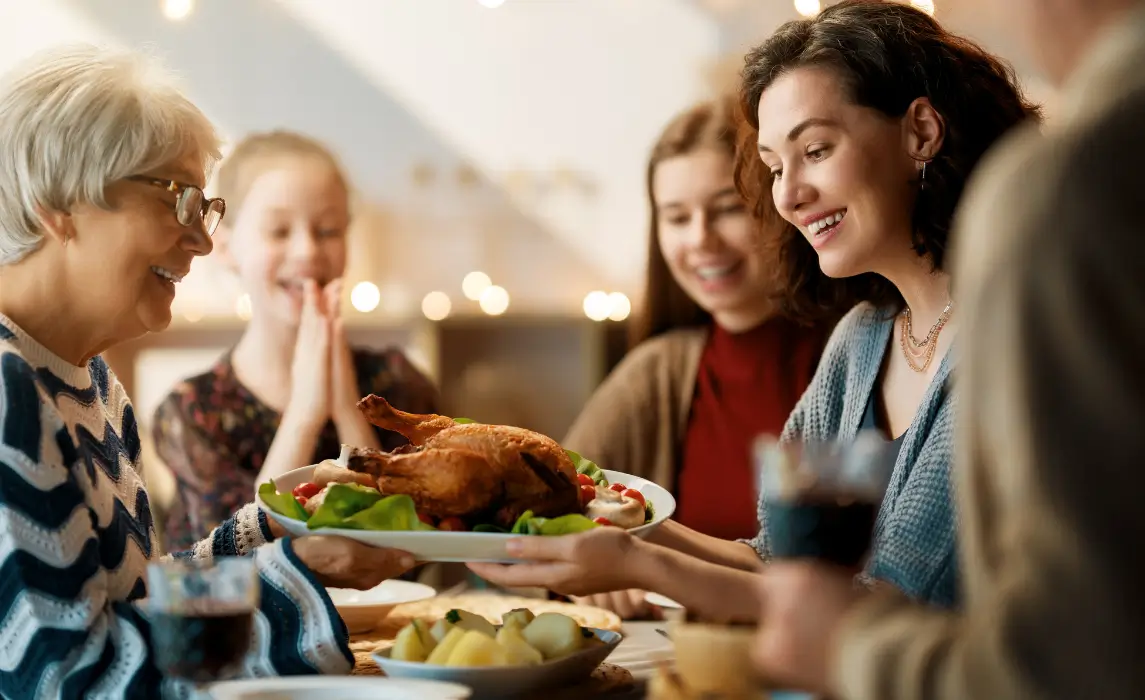
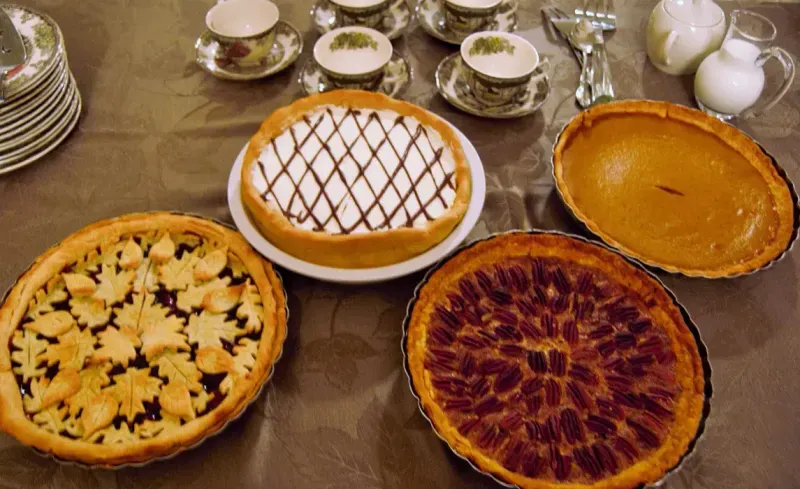
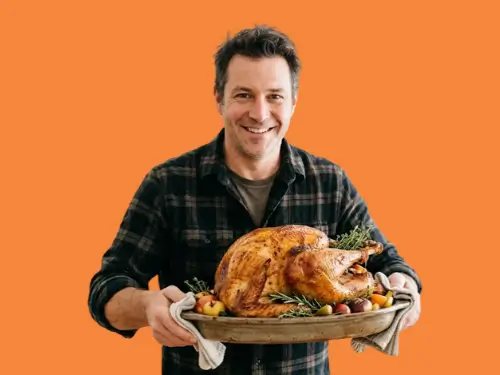
The most-loved Thanksgiving traditions are simple: a roast turkey shared around one table, a moment where everyone says what they are thankful for, family recipes passed down through generations, the morning parade, afternoon football, and pie with leftovers well into the evening. What turns those rituals into a great day at home is planning. A host who starts two to three weeks early, thaws the turkey on time, and gives every guest a small role gets to enjoy the traditions instead of watching them from the stove.
This guide explains where the traditions come from, how to time your preparations, how to host each classic tradition well, and how to start new ones your family will want to repeat.
Where do Thanksgiving traditions come from?
Most of today's Thanksgiving traditions took shape over about 300 years, and knowing the story gives you something to share at the table. The holiday traces back to a three-day harvest feast in 1621 at Plymouth, shared by the English colonists and roughly 90 Wampanoag men. Historical accounts mention venison and wild fowl, so turkey may or may not have been served.
The holiday became national in 1863, when Abraham Lincoln proclaimed a day of thanksgiving after years of letter-writing by magazine editor Sarah Josepha Hale. In 1939, Franklin D. Roosevelt moved it a week earlier to lengthen the holiday shopping season, a change critics nicknamed "Franksgiving." In 1941, Congress settled the debate and fixed the date as the fourth Thursday of November, where it remains.
The entertainment traditions arrived later. The Macy's Thanksgiving Day Parade began in New York in 1924, and the Detroit Lions have played on Thanksgiving since 1934, with the Dallas Cowboys joining in 1966. That is why so many homes still have the parade on in the morning and a game on in the afternoon.
How far ahead should you start planning Thanksgiving?
Start three weeks out. That gives you time to confirm guests, order a fresh turkey or buy a frozen one, and spread the cooking across several days so Thursday stays calm.
| When |
What to Do |
| By Nov 5 |
Confirm your guest count and ask about allergies or dietary needs. |
| By Nov 12 |
Finalize the menu, assign potluck dishes, and order or buy the turkey. |
| Nov 18–19 |
Shop for pantry staples, drinks, and anything for the table. |
| Nov 20–23 |
Move a frozen turkey to the fridge to thaw (see the table below). |
| Nov 24–25 |
Bake pies, make cranberry sauce, prep casseroles, and set the table. |
| Nov 26 |
Roast the turkey, finish the sides, and welcome guests! |
How big a turkey do you need, and when should it thaw?
Plan on about 1 pound of whole turkey per guest, or 1.5 pounds if you want leftovers. The USDA recommends thawing in the refrigerator at 40°F or below, allowing about 24 hours for every 4 to 5 pounds, and never on the counter. Once thawed, the bird keeps in the fridge for 1 to 2 more days, so starting a day early is a safe cushion.
| Guests |
Turkey Size |
Fridge Thaw Time |
Move to Fridge By |
| 6–8 |
8–12 lb |
2–3 days |
Mon, Nov 23 |
| 10–12 |
12–16 lb |
3–4 days |
Sun, Nov 22 |
| 14–16 |
16–20 lb |
4–5 days |
Sat, Nov 21 |
| 18–24 |
20–24 lb |
5–6 days |
Fri, Nov 20 |
Forgot to thaw it? Submerge the wrapped turkey in cold water and change the water every 30 minutes, allowing about 30 minutes per pound, then cook it right away. Roast at no lower than 325°F and use a food thermometer: the turkey is done when the thickest part reads 165°F. Let it rest about 20 minutes before carving so the juices settle.
One practical tip many first-time hosts miss: tape a one-page oven schedule inside a cabinet door. With one oven, the turkey occupies it for 3 to 5 hours, so plan stovetop and make-ahead sides, and slide casseroles in while the turkey rests.
Read Related Article: Hosting American Holiday Meals: What to Serve, How Much to Make, and How to Pull It Off
Plan the perfect American holiday meal with this practical hosting guide covering menu ideas, portion sizes, food preparation, and stress-free entertaining tips.
Read More
Which classic Thanksgiving traditions should you host at home?
Keep the traditions that bring people together at the table, and give each one a little structure so it feels intentional rather than awkward.
Saying what you are thankful for
The gratitude round is the heart of the day, but it can stall when people are put on the spot. Give guests a heads-up as they arrive, or place a small card at each seat with a prompt such as "one moment this year that surprised you." Prompts lead to real stories, which land better than a list of thank-yous. Doing it after the first plate, rather than before, also helps, because hungry guests rush.
The gratitude tablecloth
This tradition grows more meaningful every year. Use a plain cotton or linen cloth and permanent fabric markers, and ask each guest to write a line of thanks with their name and the year. Wash it on a cool, gentle cycle and it will last for decades, becoming a record of who sat at your table and what mattered to them.
Carving the turkey
Carving is often a small ceremony with a designated carver. If you are hosting for the first time, consider carving in the kitchen and bringing a sliced platter to the table. It is faster, neater, and keeps the food warm, and you can still present the whole bird for photos first.
Family recipes
The dishes people ask about all year are the true centerpiece. Ask the cook behind each heirloom dish to bring it, or to share the recipe so you can make it. Printing those recipes on cards with a line about who created them makes a thoughtful take-home gift and keeps the stories alive for younger relatives.
The wishbone pull
Set the wishbone aside when you carve and let it dry on a windowsill for a few days. If it is too fresh, it bends rather than snaps. Many families save it for a later gathering, such as the first weekend in December, which stretches the holiday a little longer.
How can you include kids in Thanksgiving traditions?
Children remember the traditions they help create, so give them real jobs instead of keeping them out of the way. Toddlers can tear bread for stuffing or arrange rolls in a basket. School-age kids can mash potatoes, whisk cream for the pie, or make the place cards, writing each guest's name and decorating it with a traced handprint turkey. Older children can take charge of the playlist or the photo of the day.
A gratitude jar started on November 1 is one of the easiest family traditions to keep. Each evening, family members drop in a short note about something good from that day. By Thanksgiving there are 25 notes to read aloud, which gives younger children something concrete to share during the gratitude round.
If you set up a kids' table, cover it with brown craft paper and leave crayons out. It doubles as a coloring surface and saves your tablecloth.
Read Related Article: Easy Thanksgiving Desserts That Don't Require a Culinary Degree (or a Full Day in the Kitchen)
Discover 15 easy Thanksgiving desserts that anyone can make, from no-bake treats to simple pies and crowd-pleasing sweets perfect for your holiday table.
Read More
How do you entertain guests before and after Thanksgiving dinner?
The hours around the meal shape how relaxed the day feels. Guests often arrive while the turkey is still roasting, so a light snack board and a self-serve drink station keep them happy without pulling you out of the kitchen. Keep the board light, such as cheese, grapes, and nuts, so nobody fills up before dinner. A slow cooker of warm apple cider is low effort, makes the house smell like fall, and works for both kids and adults.
After dinner, energy drops fast. A short family walk between the main course and dessert is a quietly popular tradition, giving everyone a break and making room for pie. Afterward, a dessert table where guests build their own plate, a card or board game that spans ages, or a holiday movie keeps the evening going. Before guests leave, send them home with leftovers in containers you are happy not to get back. It is generous, and it frees up your fridge.
How do you start a new Thanksgiving tradition?
Pick one idea, repeat it next year, and it becomes a tradition. Families often start with a morning turkey trot or neighborhood walk, a group photo taken in the same spot every year, or a giving-back ritual such as asking each guest to bring a canned good for a local food bank.
A meaningful idea few families try is a letter to next year. Each guest writes a short note about their year and their hopes, seals it in an envelope, and you keep the stack until the next Thanksgiving. Reading last year's letters aloud is often the most talked-about part of the day.
For friends who cannot travel home, a Friendsgiving potluck the weekend before or after lets you host without competing with family plans.
Thanksgiving hosting FAQ
How long can Thanksgiving food sit out?
No more than 2 hours. After that, refrigerate turkey, stuffing, and other perishable dishes in shallow containers so they cool quickly. Store the stuffing separately from the turkey. Eat refrigerated leftovers within 3 to 4 days, or freeze them, and reheat to 165°F.
What time should Thanksgiving dinner be served?
Many families eat in the mid-afternoon, between 2 and 4 p.m. That timing leaves room for the morning parade, lets you roast the turkey without a predawn start, and gives guests time for dessert and games before evening travel. Work backward from your serving time: add roasting time, 20 minutes of resting, and 30 minutes of buffer.
What should you ask guests to bring?
Ask for something specific, not "anything you like." Assign dishes that travel well and need no oven time on arrival, such as rolls, a salad, a pie, or drinks. That way your oven stays free and the table never ends up with three of the same casserole.
How do you host Thanksgiving in a small home?
Serve buffet-style from the kitchen counter so the dining table holds only plates and glasses, and borrow folding chairs a week ahead. A small home often makes the day feel warmer, since conversation flows when everyone is close together.
What if a guest has dietary restrictions?
Ask when you send the invitation, then make sure at least one main and two sides work for that guest without changes. Labeling dishes with small cards that note common allergens, such as nuts, dairy, or gluten, saves guests from asking about every plate.
Make the day your own
The best Thanksgiving traditions are the ones your family looks forward to, not the ones that look perfect online. Choose two or three that suit your home, plan the turkey and the oven schedule early, and leave space in the day to sit down with the people you invited. That is the tradition worth keeping.