Read Related Article: Table Setting Ideas for a Dinner Party
Discover beautiful table setting ideas for a dinner party, from elegant centerpieces and stylish place settings to simple touches that make every gathering feel special.
Read More

Use high heat, cook ingredients in batches to avoid overcrowding, and keep ingredients moving in the pan for even cooking.
Cook sliced onions slowly over low heat with a bit of oil or butter, stirring occasionally, until deeply browned and sweet.
Use a meat thermometer to check internal temperatures: 145°F for pork, 160°F for ground meats, and 165°F for poultry.
A small wedding at home works best when it is planned around the space instead of around a mood board. Count how many guests the home can comfortably seat, pick one main area for the ceremony and meal, keep the menu simple enough to serve without a large team, and settle the legal, noise, and weather questions before choosing flowers. Done in that order, a wedding for 10 to 40 people can feel warmer and more personal than most venues.
This article follows the order the decisions tend to arrive: the space, the paperwork, the ceremony, the reception, the food, the décor, and the day itself.
Most small home weddings run into trouble because the guest count came first and the measuring tape came second. A quick audit of the home prevents that.
A workable rule of thumb is to allow 10 to 15 square feet per seated guest, and less for a standing cocktail hour. A 300-square-foot living area can seat roughly 20 to 25 guests, but only if most of the furniture leaves the room. Laying painter’s tape on the floor where tables and chairs would go is the fastest way to test whether the numbers hold up.
Beyond square footage, a few practical points decide whether a home can host a wedding comfortably. Guests need a clear path from the entrance to their seats without squeezing past the kitchen. Furniture that has to move needs somewhere to go, usually a garage or spare bedroom. One bathroom becomes a bottleneck at around 30 guests, so a portable option is worth considering for larger groups. Caterers’ warming equipment, speakers, and string lights can trip a household circuit, so it helps to know which outlets share a breaker. Street parking and neighbors matter too, since both limit how big the event can realistically be.
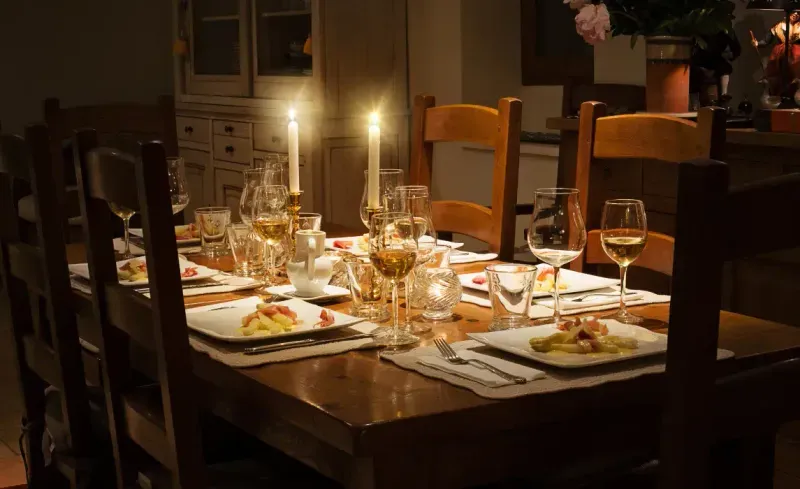
Discover beautiful table setting ideas for a dinner party, from elegant centerpieces and stylish place settings to simple touches that make every gathering feel special.
Read MoreGetting married at home is legal in many places, but the rules differ by state, country, and city. The local marriage license office can confirm whether a license is required, how long it stays valid, who can officiate, and how many witnesses are needed. It is also worth asking about local rules for tents, amplified music, and alcohol at private events.
Two details tend to get overlooked. The first is insurance: some homeowner’s policies limit liability for events, and renters usually need the landlord’s permission. The second is an alcohol plan. Hosting without a bartender is fine for a small group, but one signature drink and a clear last-call time keep the evening relaxed.
A home ceremony needs only three things: a focal point, a place for guests to sit or stand, and a spot for the couple. The best option depends on the space.
A fireplace mantel dressed with greenery or candles works as a ready-made altar, and a large window with good light needs almost no decoration. In a yard or garden, a simple arch, a tree, or a cluster of potted plants can mark the spot. For very small groups, some couples marry at the dining table where dinner follows, so guests never leave their seats and the shift from vows to the meal takes seconds. A staircase can serve as an entrance without needing an aisle. For groups under 20, chairs arranged in a circle instead of rows put every guest close to the vows.
One touch that makes a small ceremony more personal is asking two or three guests to say a few lines. In a small group, short, specific stories land harder than a long script.
A home reception succeeds when guests have somewhere to sit, something to eat, and a reason to stay in one room.
Indoors, one long table made from two or three pushed together suits 10 to 20 guests and encourages conversation across the table. For 20 to 30 guests, two or three small round tables keep the room from feeling like a single oversized dinner. A lounge-style layout with couches in conversation groups and a grazing table in the kitchen needs the least furniture removal and feels the most casual. Another approach is to use different rooms for different moments: cocktails in the living room, dinner in the dining room, and dessert on the porch. That makes a small house feel larger and gives guests natural reasons to move.
Outdoors, a string-lit dining table with a rented tent or a clear rain plan is the core setup. Lawn games fill the gap between the ceremony and dinner, and a fire pit or heaters help on cooler evenings, as long as they sit well away from guests’ clothing and decorations.
Dancing does not need a formal dance floor. A first dance in the living room, with guests standing around the edges, is often more memorable than one in a crowded room.

Explore 15 unique New Year's Eve party themes for adults, from glamorous black-tie celebrations to fun, creative concepts that make ringing in the new year unforgettable.
Read MoreFood usually takes the biggest share of a home wedding budget, so the format matters more than the menu.
A few practical choices save stress. Dishes that hold well at room temperature, or reheat easily, are safer than anything that needs last-minute attention. The timeline works best when planned backward from dinner, because anything that needs oven space needs its own slot. Hiring a helper to serve and clean up, even for a few hours, is worth the cost, since nobody getting married should be refilling water glasses. One signature cocktail plus a non-alcoholic option simplifies shopping and cleanup compared with a full bar. For dessert, a small cake from a local bakery is enough for a small guest count, and cupcakes or a dessert table skip the cutting-and-plating step.
A small space looks best with a few strong touches rather than decorations in every corner.
Lighting does more for atmosphere than most flowers do. Warm string lights, candles in secure holders, and lamps in place of overhead lights change the feel of a room quickly, and flameless candles are the safer choice near fabric. Greenery such as eucalyptus, olive branches, and potted herbs costs less than florals, lasts longer, and fits small spaces well.
Concentrating effort in one statement area, whether a dressed ceremony backdrop, an arranged table, or a styled entry, makes more impact than spreading it thin. Personal touches give the home its own character: framed family photos on a display table, handwritten menus, a guest book of notes, or a playlist the couple built together. Mismatched vintage plates and cloth napkins read as intentional at a home wedding and cost less than rentals.
What to avoid is just as important: heavy centerpieces that block conversation, too many props for the room, and anything that makes it hard to move between tables.
The most memorable details at a small wedding tend to be the quietest ones. Setting aside ten minutes after the ceremony for the couple to step away alone gives them a moment before dinner begins. Writing vows or letters privately, before the ceremony, keeps the emotion intact without an audience. A shared toast with a bottle that means something, such as one from the couple’s first trip, adds a personal note. Dimming the lights as the sun sets and letting candles take over turns a dinner into an evening.
A sparkler or lantern send-off works too, as long as local fire rules allow it and a bucket of water sits nearby. A quiet playlist built from key moments in the relationship feels more personal during dinner than a DJ set.
A small home wedding rarely needs a full-day photographer. Many couples book two to three hours that cover the ceremony, portraits, and the start of the reception. Late afternoon often gives soft, warm light, so choosing the time with the home’s natural light in mind pays off. Testing the light in key rooms a week before, and telling the photographer which areas matter, avoids surprises. One guest can handle candid phone photos during dinner, and a shared album lets everyone upload their own.
A rough schedule keeps a casual event from drifting. Final setup, a music check, and food prep fill the two hours before the ceremony. Guests arrive about 30 minutes before, with welcome drinks and seating. The ceremony itself runs 15 to 30 minutes, followed by photos, a toast, and cocktail time. Dinner comes next, with speeches kept short, then cake, a first dance, and relaxed mingling. A send-off closes the evening, and a cleanup crew takes over.
Assigning four roles to specific people removes most day-of friction: a greeter for guests and coats, a point person for the caterer or kitchen, a friend in charge of music and sound, and someone to manage cleanup so the couple never gets stuck with it.
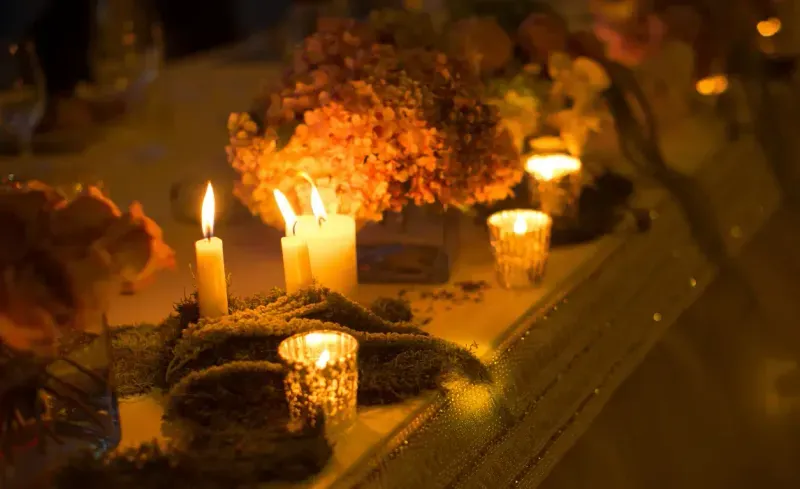
Explore September wedding colors, from warm autumn tones to soft romantic hues, and find the perfect palette to match your wedding style, venue, and season.
Read MoreRain is the biggest variable for any outdoor event. A tent, a covered patio, or a clear indoor fallback should be decided in advance, with a set call time such as 48 hours before. Heat and cold call for fans, shade, blankets, or heaters. A flexible ceremony start and a drinks buffer absorb most late arrivals. Telling neighbors about the event ahead of time, and setting a music cutoff that fits local rules, heads off noise complaints. Keeping phone numbers for the caterer, officiant, and photographer within reach covers vendor surprises.
The mistakes that show up most often are inviting more people than the space can seat, leaving kitchen and power capacity unchecked until the day, skipping a rain plan, hosting without help for serving and cleanup, over-decorating a small room until guests can’t move, and leaving the couple with last-minute chores on the wedding day.
A rough guide is 10 to 15 square feet per seated guest. A typical living and dining area holds 15 to 25 guests, and a house with a yard can host 30 to 50 with a tent.
Usually not for the ceremony itself, but a marriage license is required almost everywhere. Tents, amplified music, or alcohol service may have local rules, so check with the city or county.
Focus on lighting, greenery, and one strong focal point instead of filling every room, and remove excess furniture to create space.
A buffet, family-style meal, taco bar, or restaurant-prepared trays usually costs less than plated catering. Hiring a helper to serve is worth the expense.
Decide on a tent or indoor backup early, set a clear decision deadline, and share the plan with guests in advance.
Yes. A candlelit table, personal vows, a private moment together, and a meaningful playlist make a small group feel intimate rather than reduced.
.webp)
.webp)
