Halloween planning usually starts the same way: you Google "Halloween activities for kids," get ten lists that all recycle the same fifteen ideas , carve a pumpkin, bob for apples, do a costume parade , and end up no closer to a plan that actually fits your kid, your budget, or the fact that it might rain on October 31.
This guide skips the filler. Everything below is grouped by what actually changes your plan: your child's age, whether you're stuck indoors, how much you want to spend, and whether your family needs a lower-sensory option. Each section also includes a detail most lists leave out , the "why this works" or the practical catch that saves you a wasted trip to the craft aisle.
Quick Answer: Best Halloween Activities by Situation
If you only have a minute, here's the fast version. For toddlers between two and four, pumpkin painting instead of carving, a "friendly monster" scavenger hunt, and sensory bins with fake spiderwebs cover most of the appeal without the mess or the hazards. For kids between five and nine, DIY costume contests, a backyard obstacle course, and glow-in-the-dark ring toss give them enough structure to play without constant supervision. Tweens between ten and twelve tend to respond better to ownership than participation, so a haunted house build-out, a stop-motion Halloween video, or an escape-room-style puzzle hunt work better than anything scripted for younger kids. If the weather turns, a slime lab, a shadow puppet theater, or a mummy wrap relay move the whole plan indoors without losing the fun. On a tight budget, paper bag masks, flashlight tag, and a homemade twist on bobbing for apples cost next to nothing. And for sensory-friendly celebrations, a quiet trick-or-treat hour, no-carve pumpkin decorating, and low-light glow crafts let kids who get overwhelmed by noise and crowds join in on their own terms.
Now, the detail behind each one , including what to watch out for.
Read Related Article: 15 Easy Thanksgiving Desserts That Don't Require a Culinary Degree
15 easy Thanksgiving desserts anyone can make, from simple pies to no-bake treats. Enjoy delicious, crowd-pleasing sweets without complicated recipes or fancy skills.
Read More
Activities by Age Group
Toddlers and Preschoolers (Ages 2–4)
At this age, the goal isn't spooky , it's tactile and safe. Most "Halloween crafts for toddlers" lists suggest carving pumpkins, which is a choking and cutting hazard for this age group and honestly more work for the parent than the kid. Skip it.
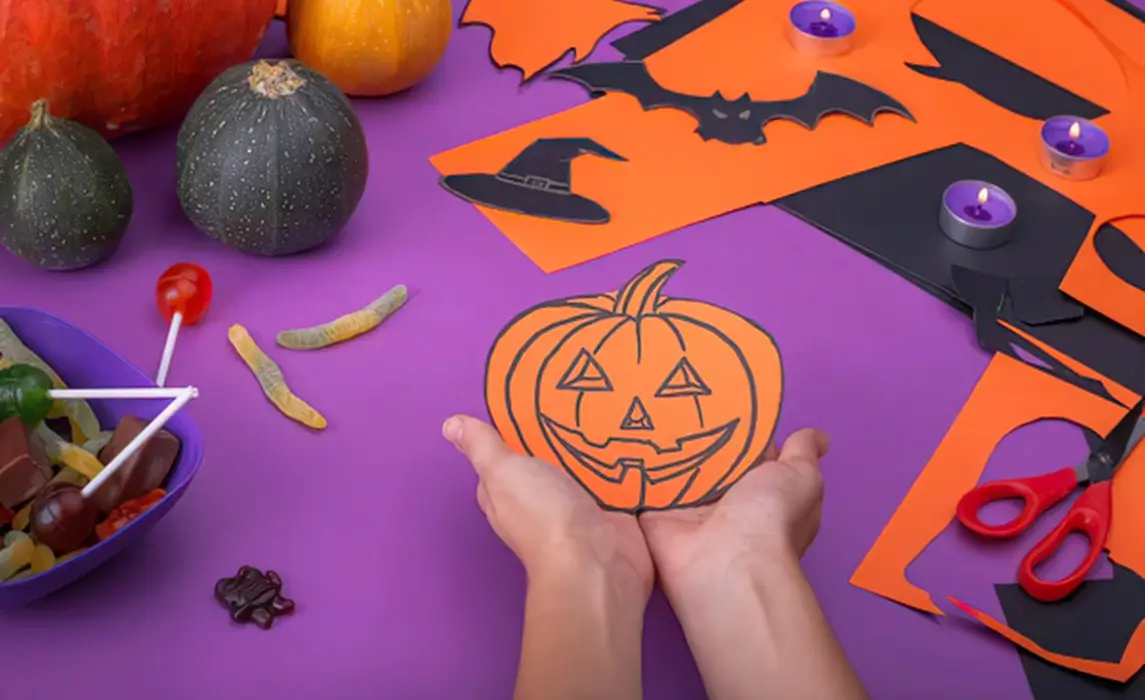
No-carve pumpkin painting solves that problem directly: washable tempera paint lets them go full abstract, and a clear coat of Mod Podge over the top means it survives a week on the porch instead of smearing the first time it rains. A spiderweb sensory bin , dried black beans or rice with small plastic spiders and pom-pom "eyeballs" hidden inside , gives them something to dig through, and quietly builds fine motor skills without ever framing it as a lesson. A friendly monster hunt works well as a lower-key alternative to a full scavenger hunt: draw or print six friendly monster cutouts, hide them around the house or yard, and turn finding each one into a simple counting game. It's also worth scheduling a costume dress rehearsal the week before Halloween, since toddlers often panic at costumes on the night itself simply because it's the first time they've worn it. Twenty minutes around the house in the full costume is usually enough for the mask, hat, or unfamiliar texture to stop being a surprise.
Elementary-Age Kids (Ages 5–9)
This is the age where kids can follow multi-step games and actually remember the rules, which opens up competitive and cooperative options that don't work with younger kids.
A DIY costume contest with categories , Funniest, Most Creative Use of Cardboard, Best Group Costume , spreads the win around instead of crowning one overall winner, and rewards effort over how much a costume cost. A backyard obstacle course built from pool noodle limbo, a yarn "spiderweb" strung between trees to crawl through, and a bean-bag toss into a carved pumpkin's mouth works best when kids race against their own previous time rather than each other, which sidesteps the sibling rivalry that tends to derail these nights. Glow-in-the-dark ring toss is an easy backyard option that doesn't require a full haunted-house setup: push glow sticks into the ground in a triangle at dusk and toss rings at them. For kids who read independently, a Halloween scavenger hunt built from six to eight rhyming clues that lead from room to room, ending in a small treat bag, runs with far less supervision than the games built for younger siblings.
Tweens (Ages 10–12)
Tweens often age out of trick-or-treating enthusiasm before they age out of wanting to celebrate. Giving them ownership of the activity, rather than having them attend one built for younger kids, tends to keep them engaged.
Letting a tween design and build a mini haunted house in the garage or a spare room , using cardboard, string lights, and a fog machine, or a humidifier with a black light as a cheaper substitute , gives them a real project with a clear payoff: assign them the "scare actor" role for younger siblings' friends on the night itself. A stop-motion Halloween short film is another option that reads as a holiday activity but is really a skill-building project: using a phone and a free app like Stop Motion Studio, kids this age can plan, shoot, and edit a 60-second horror-comedy short with action figures or clay characters. An escape-room-style puzzle hunt , three or four locked-box puzzles, such as a padlock with a code solved by a math riddle, a message revealed under UV light, or an anagram , leads to a final "treasure" and holds this age group's attention longer than a straightforward scavenger hunt because it actually requires problem-solving.
Read Related Article: Kids Halloween Party Ideas: Fun Halloween Parties
Fun and easy kids’ Halloween party ideas for a spooky celebration! Discover games, crafts, treats, decorations, and activities kids will love.
Read More
Indoor Activities (Weather Backup Plan)
Halloween falls on a weeknight roughly as often as a weekend, and outdoor plans get rained out more than people admit. None of the following need a backyard.
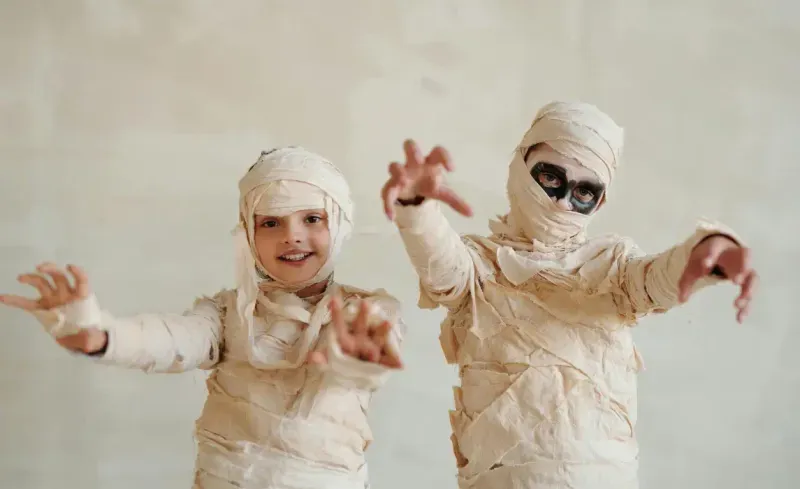
A Halloween-edition slime lab , the standard glue, baking soda, and contact lens solution recipe, tinted orange or green with plastic spiders mixed in , doubles as a sensory activity for younger kids and a "gross-out" activity that tweens genuinely enjoy. A shadow puppet theater needs only a flashlight, a bedsheet, and paper cutouts of bats, cats, and ghosts taped to skewers; kids write and perform a two-minute "spooky story" behind the sheet with no craft supplies beyond paper and tape. A mummy wrap relay , teams racing to "mummify" one teammate in rolls of toilet paper within 60 seconds , is loud and fast enough to burn off the energy that indoor days tend to trap. For younger kids specifically, a bag of candy corn doubles as a counting, sorting, or simple-addition math game before it becomes the data they get to eat.
Community and Outdoor Activities
Not every Halloween activity has to happen at home. Depending on your area, a few options are worth checking for in the weeks before October 31.
Local trunk-or-treats, run by churches, schools, and community centers in parking lots, tend to be better lit and more accessible than door-to-door for younger kids or kids with mobility needs. Pumpkin patch corn mazes usually scale in difficulty by section, so it's worth asking staff which path is the "kid loop" versus the full maze before committing a toddler to 45 minutes of dead ends. Public libraries also often run free, low-key Halloween story times or craft sessions in the weeks leading up to the holiday , a good option if you want the holiday spirit without the sugar or the noise of a bigger event.
Sensory-Friendly and Inclusive Options
This is the section most Halloween guides skip entirely, and it matters for more families than you'd think , kids with sensory processing differences, anxiety, or younger siblings who get overwhelmed by loud, dark, crowded events.
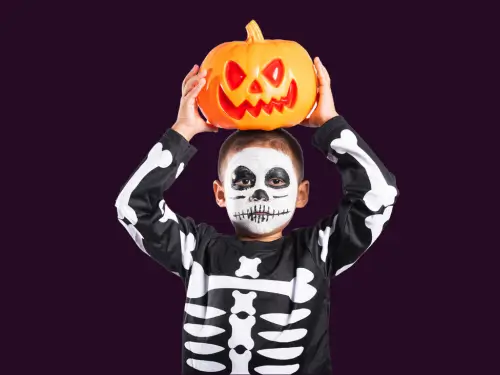
A growing number of neighborhoods and municipalities now designate an earlier, well-lit "quiet hour" for trick-or-treating before dark, specifically aimed at reducing sensory overload. These are often organized informally by neighborhood rather than citywide, so a town's community Facebook group or municipal site in early October is usually a better source than a general search. The teal pumpkin project is a simple way to make your own stop inclusive: placing a teal-painted pumpkin on the porch signals that you're offering non-food treats, like stickers or small toys, for trick-or-treaters with food allergies , and it's worth explaining to your own kids why some houses have a different-colored pumpkin. No-carve, no-mess decorating, using stickers, washable paint pens, and pre-cut foam shapes, lets kids with texture sensitivities take part in pumpkin decorating without touching the inside of a pumpkin, which for some kids is the actual barrier to joining in at all. And costumes built around face paint, patch-tested a few days ahead, or a headband-style accessory instead of a mask avoid the two most common sensory complaints kids have about costumes: restricted breathing and itchy seams.
Budget-Friendly Activities (Under $10)
Brown paper bags, safety scissors, and markers make a full set of paper bag masks for a group of kids for under two dollars total. Flashlight tag costs nothing beyond a flashlight you likely already own , one rule, "tagged" means caught in the beam for three seconds, is enough to run the whole game. A hands-free upgrade to bobbing for apples skips the shared water bin most parents avoid for hygiene reasons: hang apples from string at head height instead, and the game plays exactly the same without anyone dunking their face in shared water. And organizing a costume swap with neighbors a week or two before Halloween turns last year's outgrown costume into this year's free one for another family's kid.
Read Related Article: Best Willy Wonka Party Ideas for Kids & Adults
Discover the best Willy Wonka party ideas for kids and adults, including magical decorations, fun games, sweet treats, costumes, and creative activities.
Read More
Safety Notes Worth Actually Reading
A few specifics that get glossed over in most lists. Reflective elements matter more than glow sticks: glow sticks help kids see, but reflective tape is what helps drivers see kids, and a strip added to the back of a costume or trick-or-treat bag addresses the actual leading cause of Halloween pedestrian incidents , low visibility to drivers, not a lack of light for the child. Face paint is worth testing three days ahead rather than the morning of, since a small patch test on the inner wrist catches an allergic reaction before the entire face is covered on the night itself. And it's worth checking costume length against a staircase, not just a mirror , a costume that looks fine standing still can become a trip hazard on porch steps, so having kids walk up and down stairs in the full costume before Halloween night catches the problem while there's still time to hem it.
FAQ
What is the best Halloween activity for a 3-year-old?
No-carve pumpkin painting with washable paint is the most reliable option , it avoids the choking and cutting hazards of carving while still giving a toddler a sense of ownership over "their" pumpkin.
What can kids do on Halloween besides trick-or-treating?
Trunk-or-treats, library Halloween programs, a backyard obstacle course, or a home haunted house build-out all work as full alternatives, particularly for kids who are sensory-sensitive or too young for extended door-to-door walking.
How do I make Halloween activities sensory-friendly?
Look for a local quiet-hour trick-or-treating event, offer no-carve pumpkin decorating instead of messy carving, and choose costumes without masks or tight seams. Face paint patch-tested in advance is usually better tolerated than a full mask.
What are cheap Halloween activities for kids?
Paper bag masks, flashlight tag, and a string-based apple bobbing game each cost under a few dollars and use household items most families already have.
What does the teal pumpkin on a porch mean?
A teal pumpkin signals that the house is offering non-food treats, such as stickers or small toys, for trick-or-treaters with food allergies.


-p-800.webp)
.webp)
.webp)